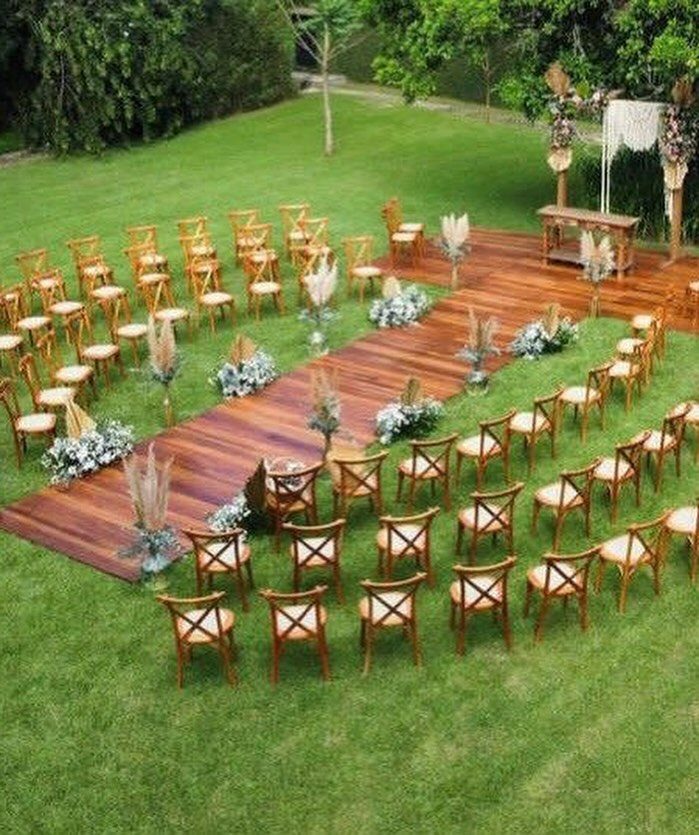
The ideas here run from a traditional center aisle with matching rows to a circular ceremony layout, and from lounge furniture to symmetrical wooden bench rows, though the real spread is in how much floor space each one takes.
Your guest count decides which layout is yours: lounge furniture suits a small list, while mixed benches and traditional rows hold a larger crowd without stretching the room.
A plan for the seating chart matters as much as the chairs, because a divorced parent needs a spot worked out well before the day.
1. Reserved Seating for VIPs
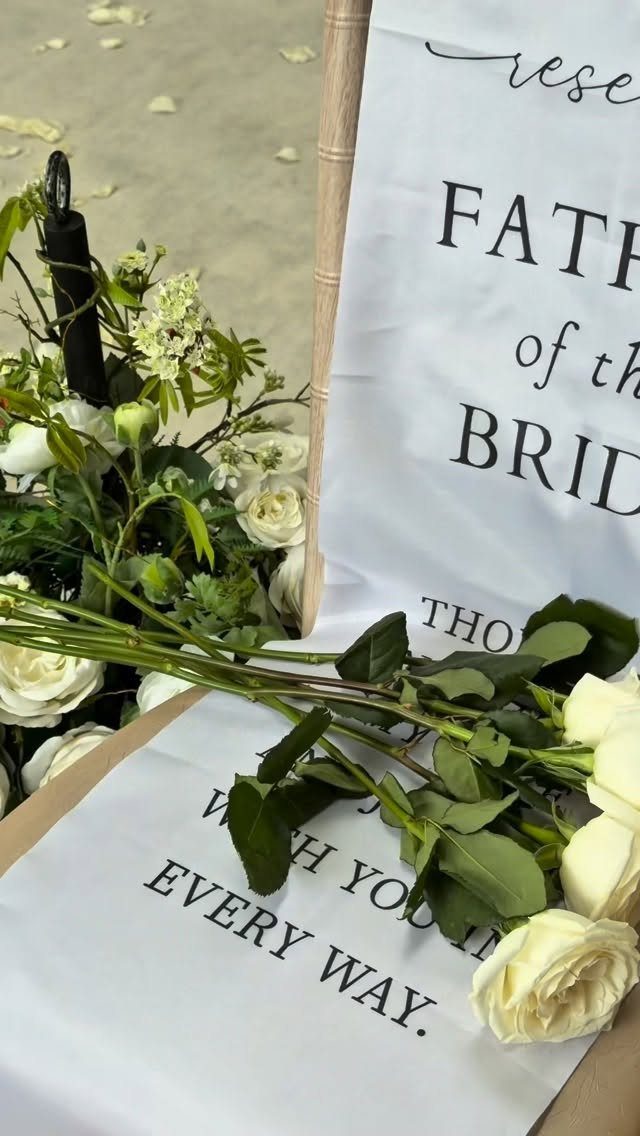
Reserved seating takes one small sign and one chair per honored guest. Mark the front row for parents, grandparents and anyone else you want close to the aisle, so nobody has to wonder where to sit.
Keep the signs short and legible from a few feet away, like the simple "Father of the Bride" label with a few white roses.
Brief your ushers on which seats are held, because a sign alone won’t stop an early guest from sitting down.
I would reserve only the first row or two. More than that makes the rest of the room feel like leftovers.
2. Traditional Seating Layout
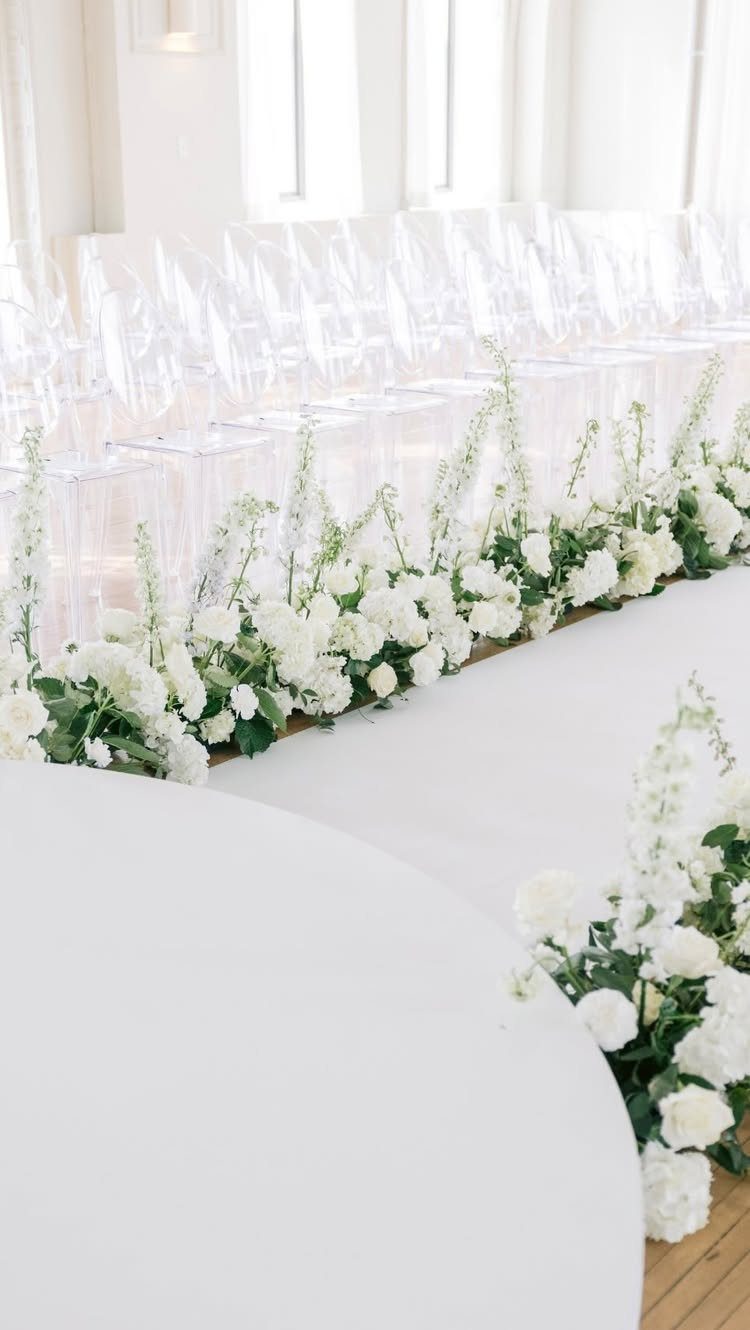
A center aisle with matching rows on each side is the layout I would pick when the room is bright and you want the flowers to do the talking.
Clear chairs nearly vanish, so the white aisle and floral borders carry the look.
Count your guests, then add a few spare chairs. Leave the aisle wide enough for the processional and a bridal gown.
It costs little to plan, and nobody will be confused about where to sit.
3. Head Table Vs. Sweetheart Table
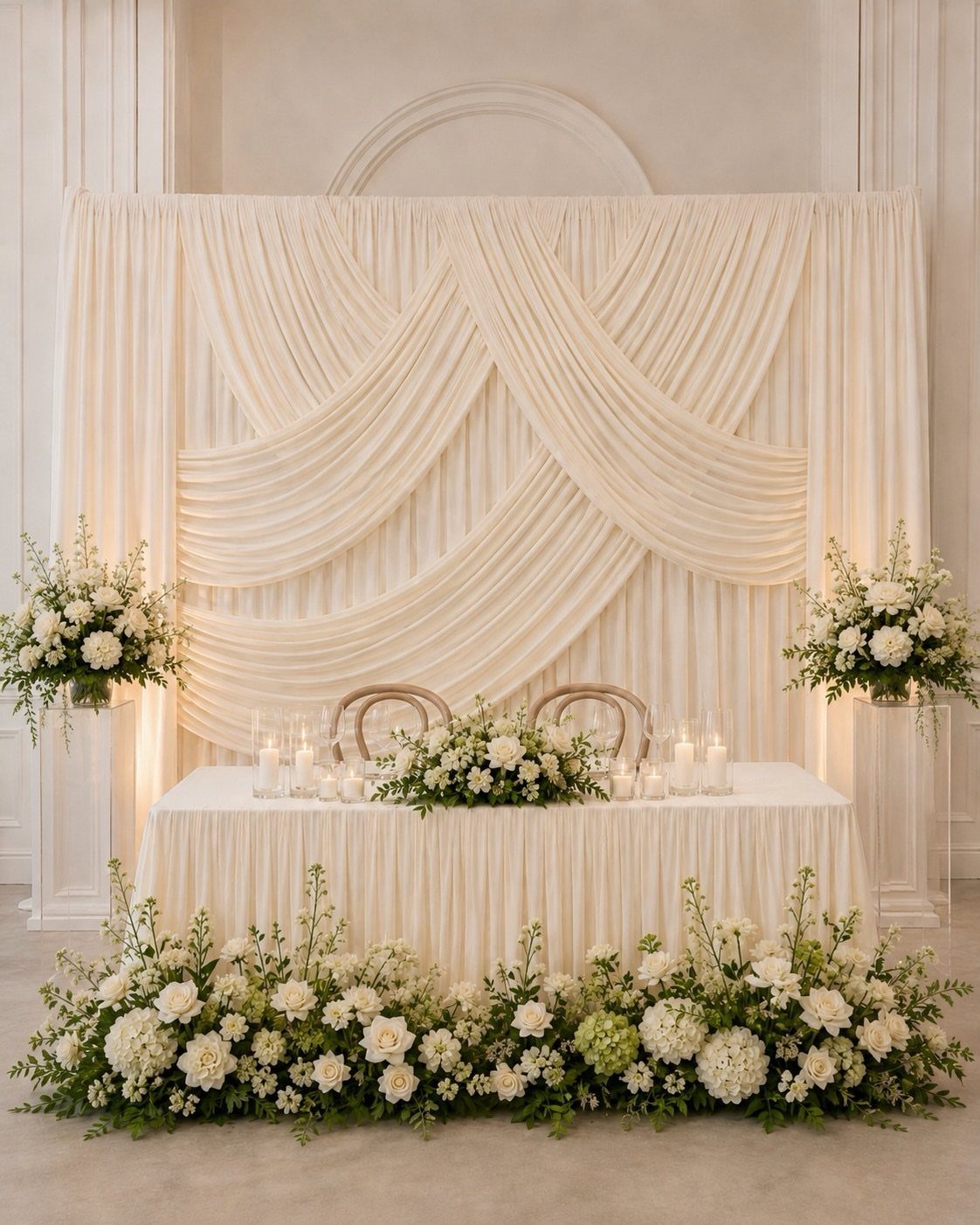
2 chairs at a small table, or a long table for the whole wedding party: that choice shapes the reception more than most people expect.
A sweetheart table, dressed in white linen with candles and low flowers, gives you a quiet moment together and takes up very little floor space.
Seat the wedding party at a head table and your closest friends sit right beside you, which is the draw for couples who don’t want to be separated from them. It needs more length, more linen and more flowers.
In a tight room, or on a lean budget, I lean toward the sweetheart table.
4. Curved Aisle Seating Layout
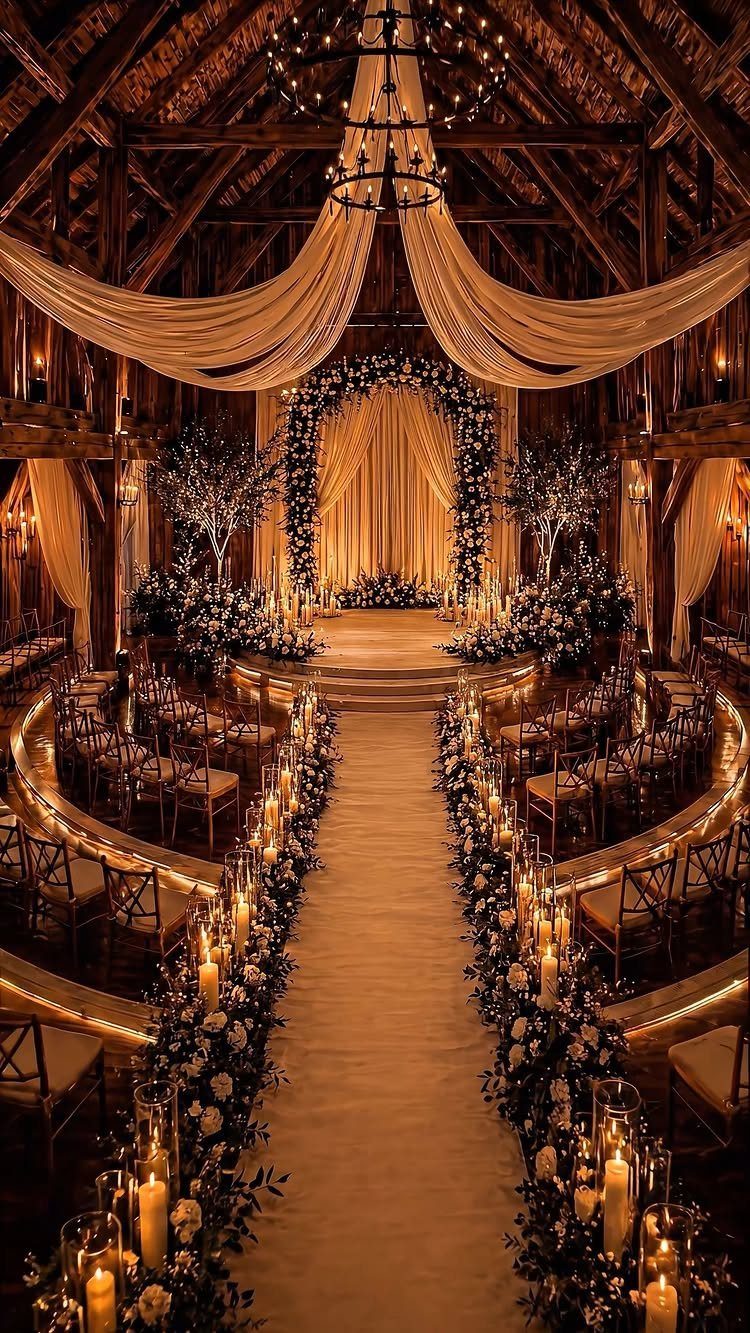
Rows that bend toward the altar pull every guest’s eyes to the couple, and the arc softens a room with hard edges. In a barn, dark wooden chairs against pale draping and candles look warm without much extra decor.
Curved rows need more floor planning than straight ones. Sketch the arc, measure the space, and ask your rental company whether they can supply chairs in matching sets.
Keep the aisle clear of candles where guests might brush past, since the curve narrows sightlines.
5. Lounge Furniture Ceremony Seating
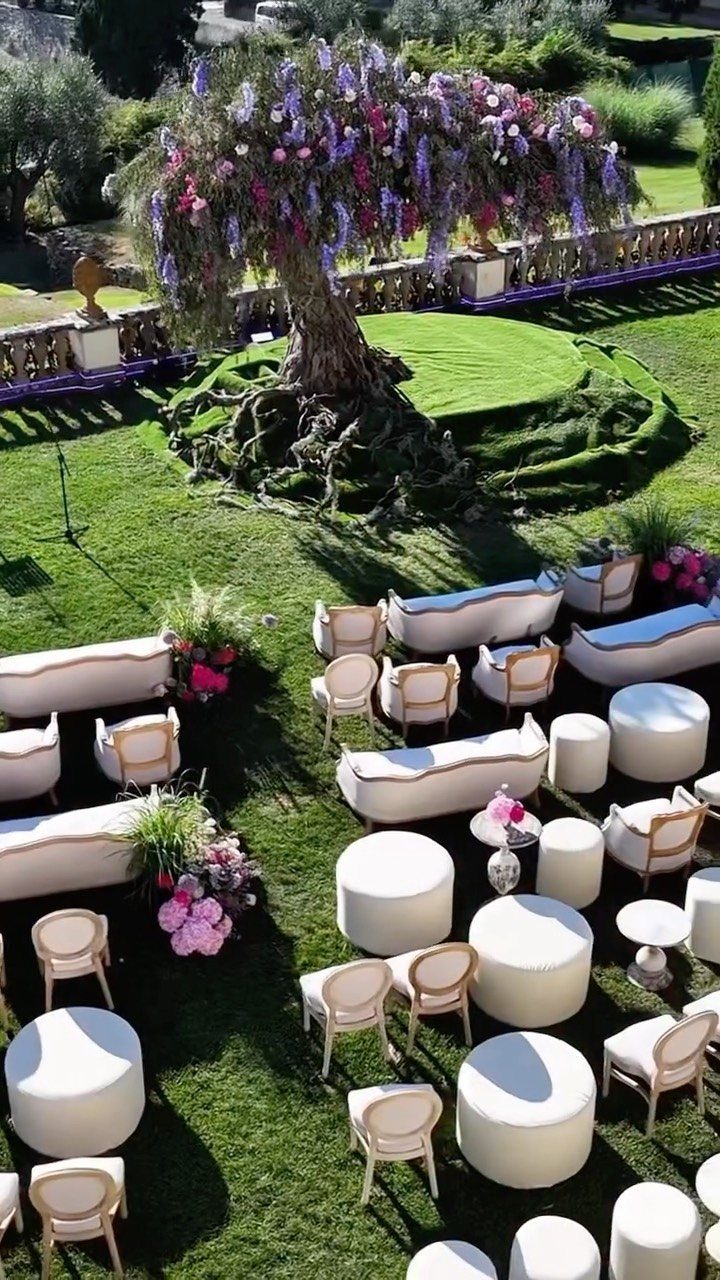
Sofas and ottomans turn a ceremony into something closer to a garden party. Curved white sofas let guests sit in small groups, facing each other as much as the couple, which suits a short, relaxed ceremony.
Lounge pieces cost more to rent than folding chairs and seat fewer people per square foot. I would use them for a guest list under about 50, or reserve them for family while everyone else takes standard chairs.
Soft ground matters: check that the lawn is firm and level before delivery day.
6. Mixed Benches and Chairs
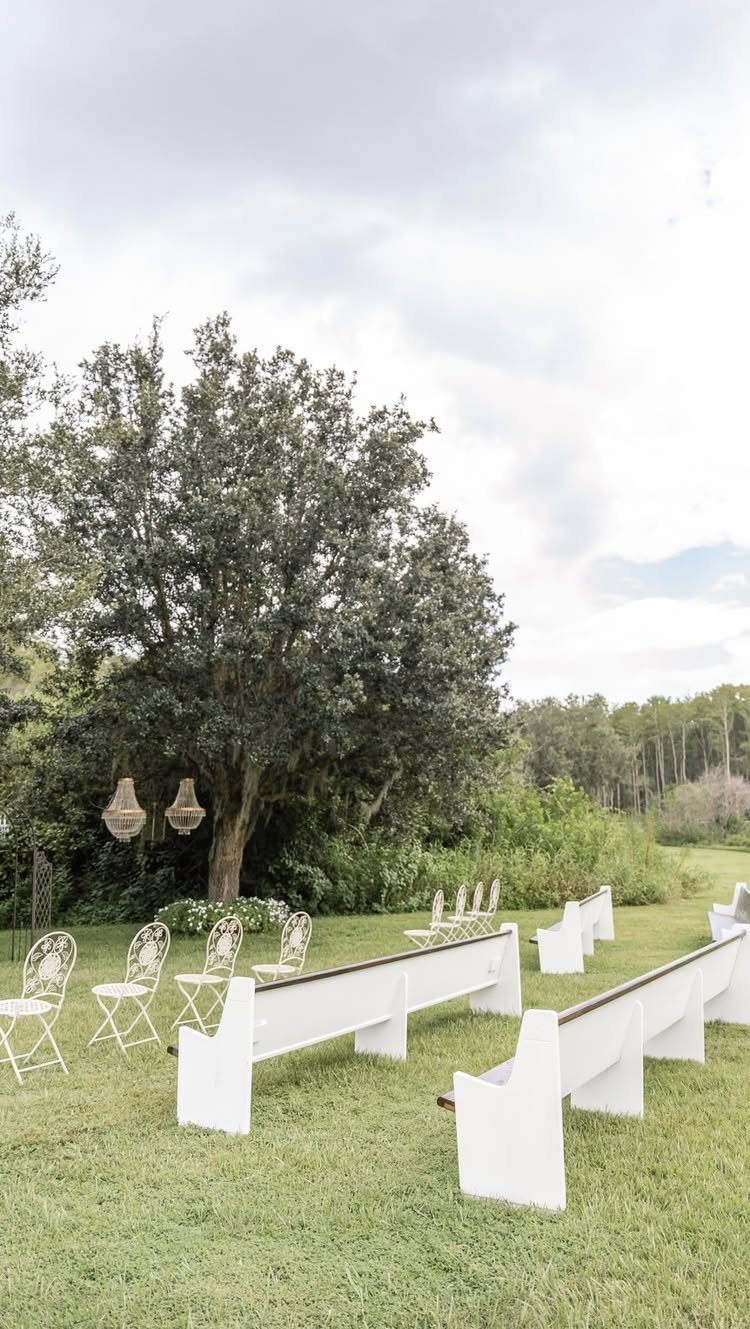
White wooden benches next to ornate white metal chairs give you two textures in one color, and that keeps a lawn ceremony from looking rented by the dozen.
Benches fit more people per row; chairs go to anyone who wants a little more support.
Put the benches in the main block and use the chairs at the edges or the back. Keep them all white so the mix reads as a choice rather than a shortage.
Rental companies often price benches and chairs differently, so compare quotes before settling on a ratio.
7. Circular Ceremony Seating Layout
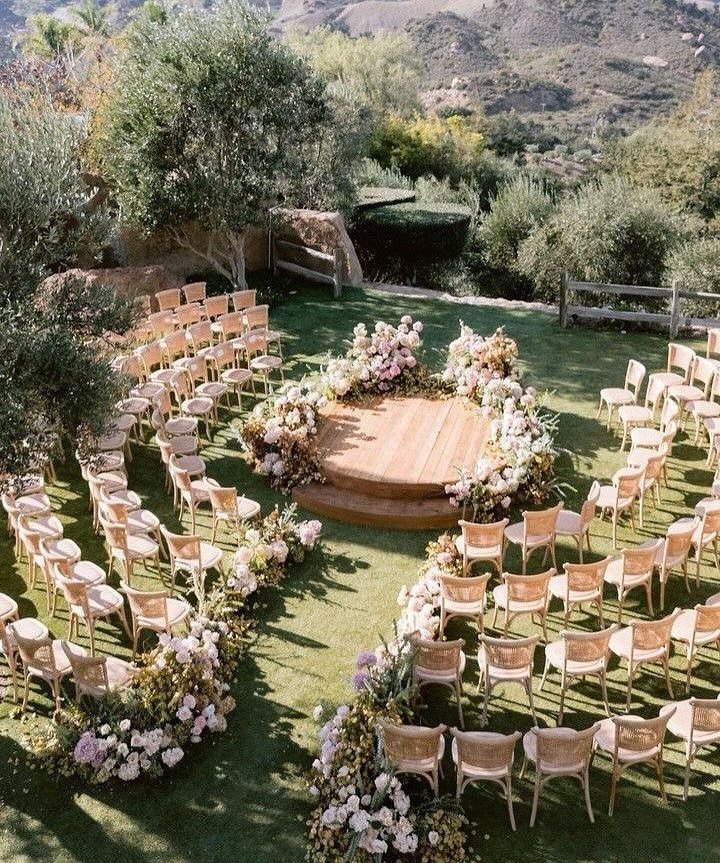
Concentric rows that wrap a raised round platform put every guest close to the vows, and no seat feels like the back. Light chairs on grass keep the look airy, and the flowers on the platform carry the decor.
Sketch the rings on paper first, since each outer row seats more people than the one inside it and the chair count climbs fast. Leave a gap in the circle for the aisle.
I would pick this for a small guest list in an open spot with a view.
8. Symmetrical Wooden Bench Rows
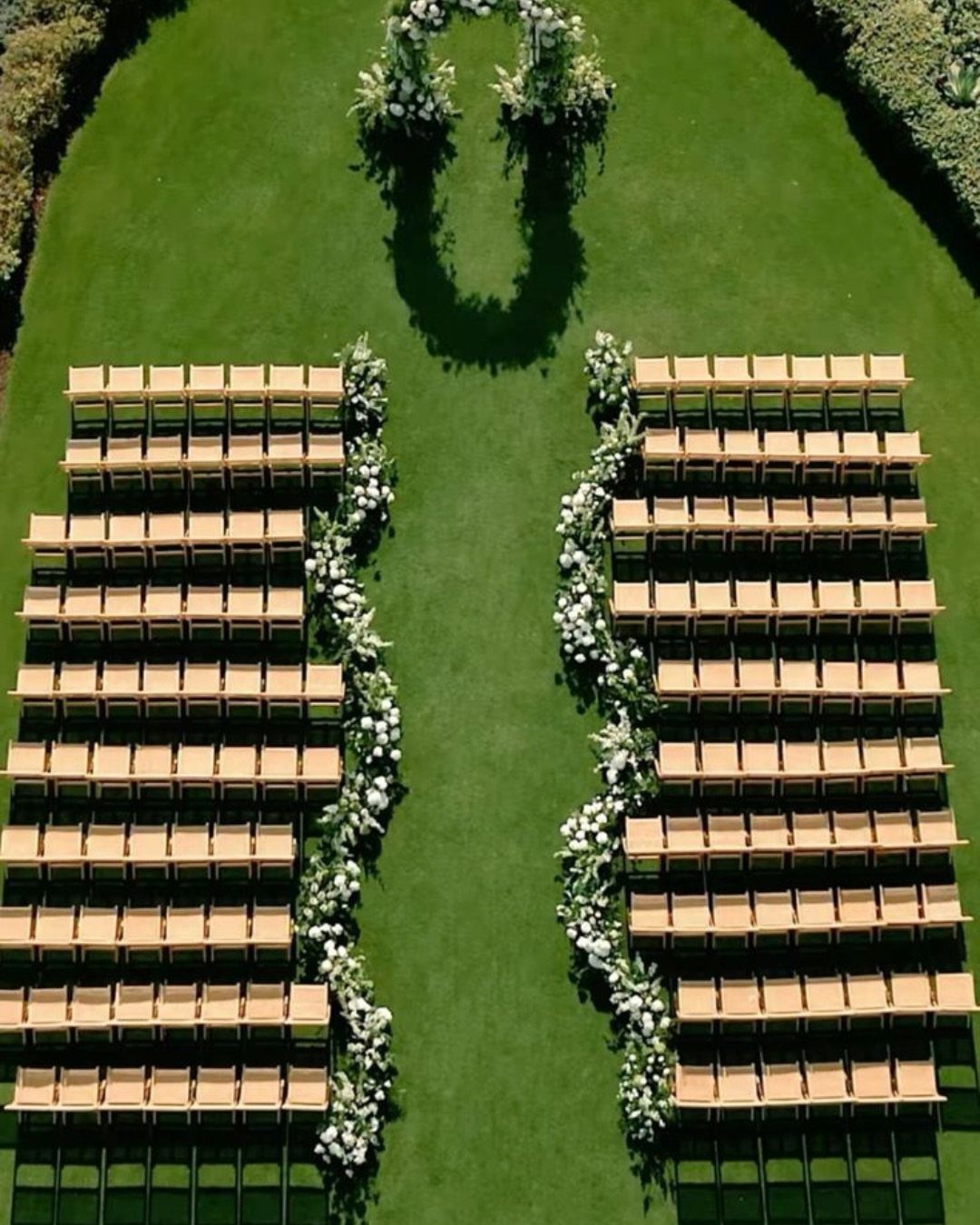
2 matching blocks of light wooden benches, split by a straight aisle and aimed at a floral arch, give a lawn ceremony a calm, balanced shape. The arch becomes the focal point, so the benches can stay plain.
Benches seat more people per row than single chairs, which helps on a tight guest count.
9. Hanging Escort Cards
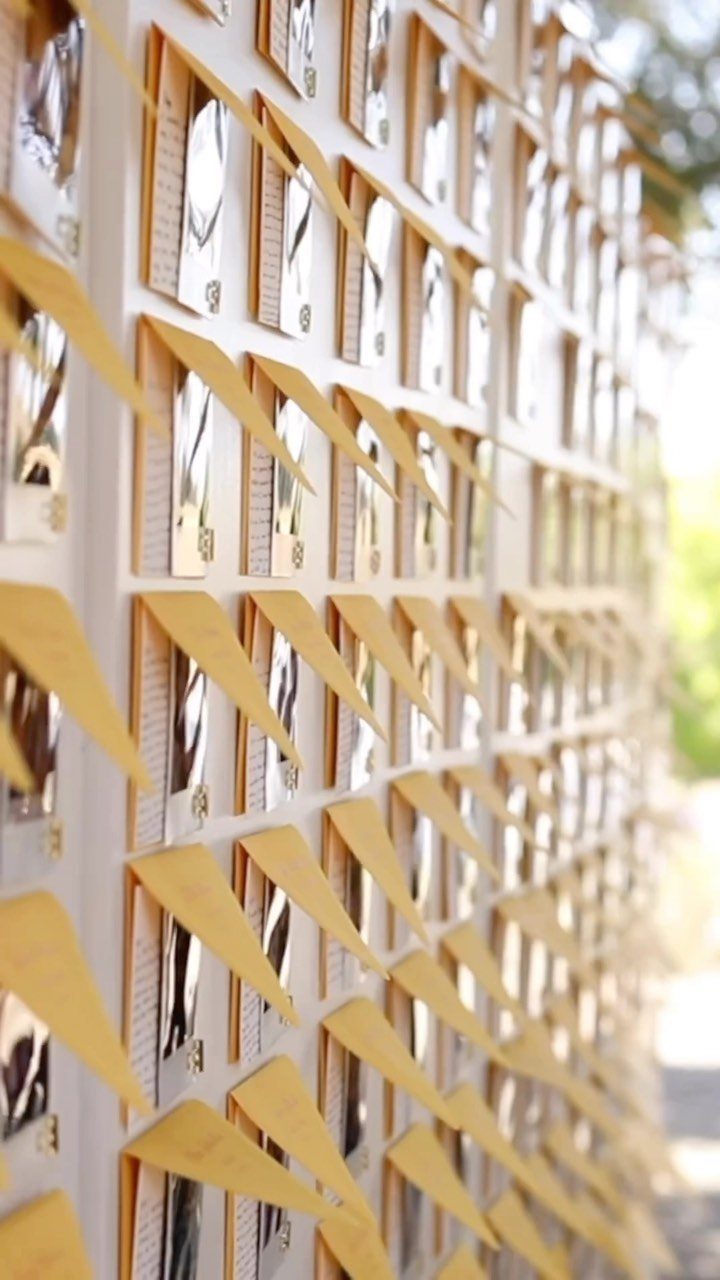
Escort cards tucked into small envelopes and sorted alphabetically let guests find their own name at a glance. A grid on a white wall keeps the display tidy and takes up almost no floor space.
Write each table number clearly on the card, and double-check spelling before printing. Leave a spare blank envelope or two for surprise plus-ones.
If you want a softer look, lay the cards across a table with flowers and candles instead. I prefer the wall: it handles a crowd better.
10. Children’s Table
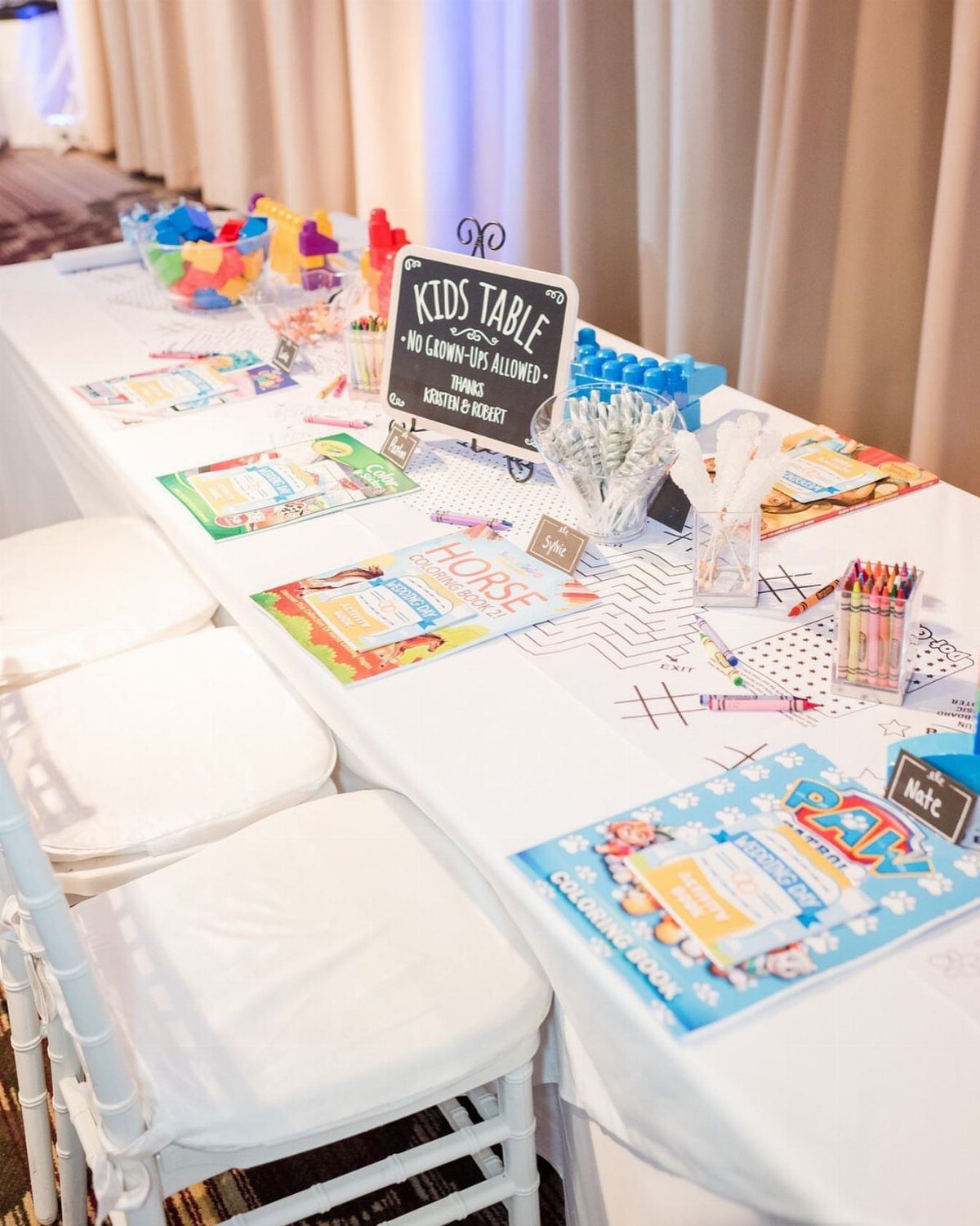
A separate table stocked with coloring books and crayons keeps children busy while the adults enjoy dinner. A cheeky sign like "No Grown-Ups Allowed" makes them feel like the guests of honor.
Seat it within sight of their parents, and put a few crayons and a book at each place. Ask a teen cousin or a sitter to sit nearby.
For one or two kids, I would skip the table and seat them with family.
11. Communicate Seating Clearly
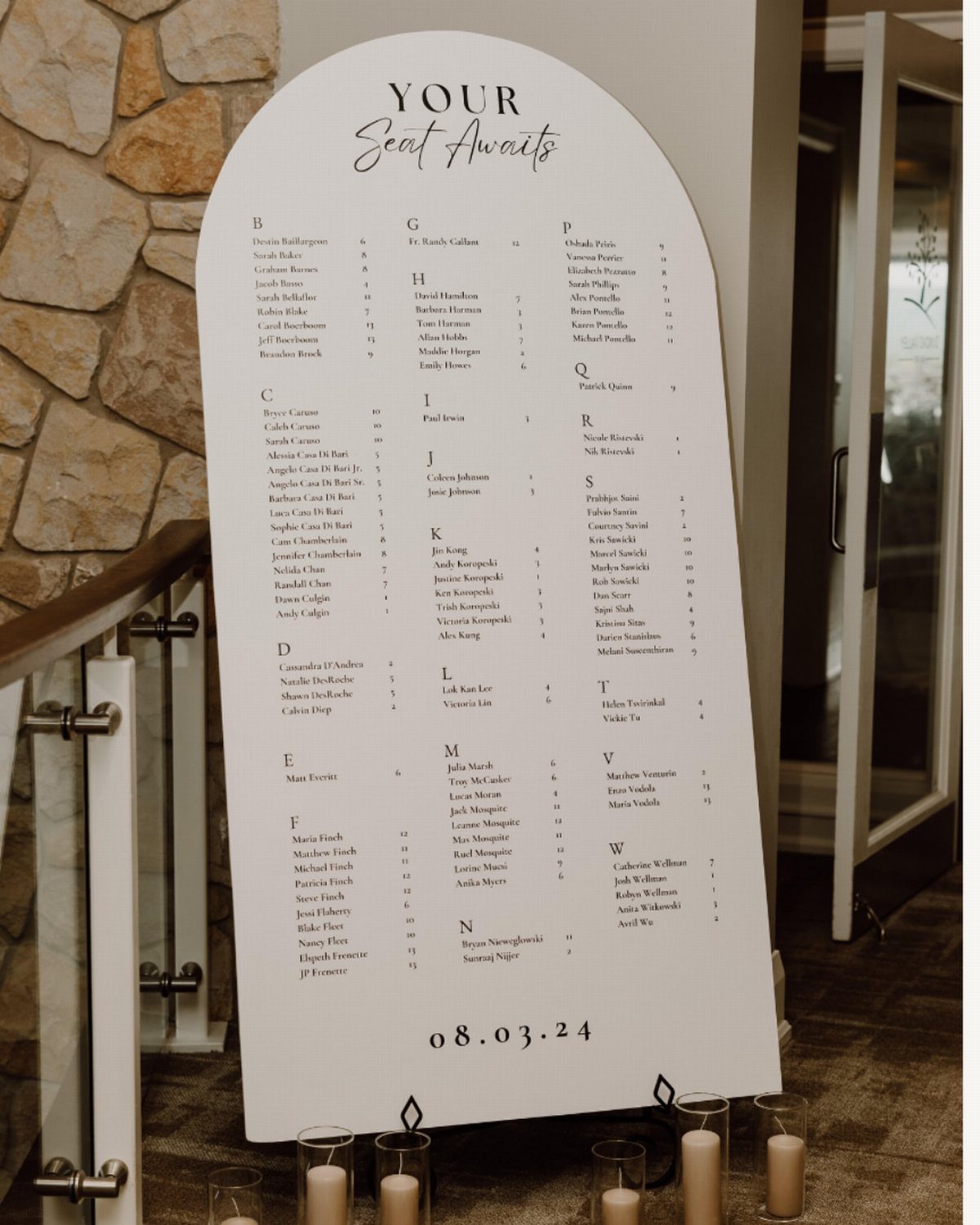
A large sign listing guests by table number, set on an easel near the entrance, saves everyone from wandering the room. Keep the lettering big and the table numbers in clear order so people find their table in seconds.
Place it where guests walk in, with candles or flowers beside it so the spot looks intentional. Put a second chart elsewhere if the crowd bunches up.
Proofread every name before printing: a misspelled one on a large sign is hard to miss.
Importance of a Seating Plan
A free-for-all, where you set out enough chairs and let people sit anywhere, tends to leave grandparents stranded in the back and a mother of the bride scanning for an empty seat as the music starts.
Assigned seating for close family prevents that, and it helps every other guest settle quickly.
The bigger the guest list, the more an assigned plan matters. It also matters if your ceremony follows cultural or religious customs that place particular relatives in particular spots.
If you prefer not to assign every seat, reserve the front two or three rows for family and anyone else you want close, then leave the rest open.
Put the plan in the program too, so a guest who missed the sign can still check it.
Handling Divorced Parents
Divorced parents need a decision from you before the day, and a clear brief for your ushers. If they get along, nothing stops them from sharing the front row.
If there is strain, keep them apart.
The mother of the bride sits in the first row, with her current spouse if she’s remarried. Her parents, her siblings who aren’t standing up with you, and aunts and uncles fill the second and third rows.
The father of the bride sits a few rows back from that group, in the fourth or fifth row, with his spouse and his side of the family.
If he walks you down the aisle, he takes that seat afterward. This holds even if he is hosting the wedding.
Seat the groom’s divorced parents the same way. Give your ushers the plan in writing.
When either the bride or groom’s parents are divorced the seating needs to be planned carefully and the ushers need clear instructions.
Guest Dynamics
Most people relax when they know at least one or two others there, so avoid any table where everyone is a stranger.
Mix groups on purpose. Put guests with something in common at the same table, because a shared interest moves a conversation along faster than polite questions about the drive in.
Anyone who has history with someone else gets seated across the room, not 3 chairs over. If it suits your crowd, seat singles together, which can spark a few introductions.
I would do the awkward pairings first and fill in the easy tables last.
Frequently Asked Questions
What is the traditional seating plan for a wedding ceremony?
Rows of chairs face the altar with a center aisle between them, matching on each side. Start with a headcount, add a handful of spare chairs, and leave the center aisle wide enough for a gown and a full processional.
Where do divorced parents sit at a wedding ceremony?
If they get along, they can share the front row. When relations are tense, the bride’s mother takes the first row with her spouse, while the father sits in row 4 or 5 with his spouse and his relatives.