The ideas here run from a Butterfly Seating Chart and a Record Seating Chart to Theatre-Style rows and Long Banquet Tables, with escort cards made from succulents, ornaments and shot glasses in between.
Your guest count and room decide the table style, so a floor plan from your venue comes before any display, and the Creating a Floor Plan section is the place to start.
Once you know how many tables fit, the chart can be as simple as a mirror with cards pinned to the glass or a window pane with names written on in paint pen.
1. Acrylic Seating Signage
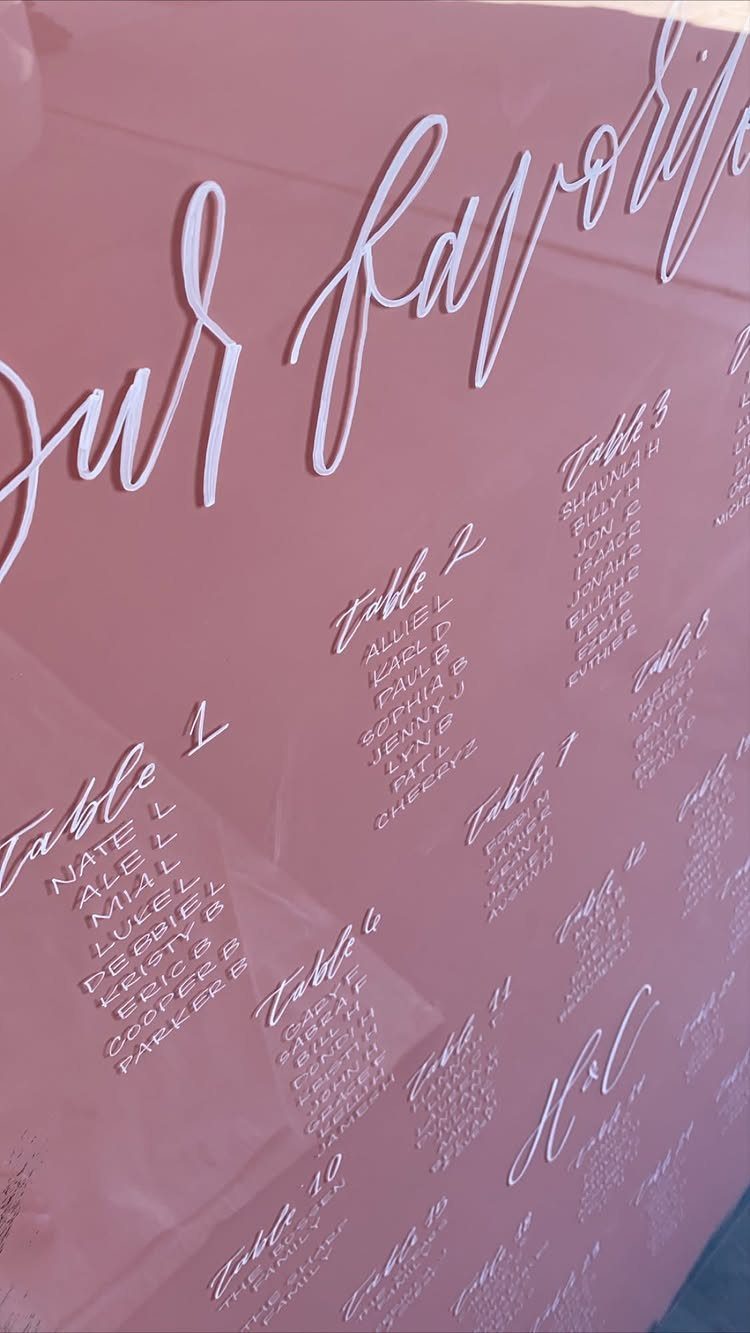
Pink acrylic with white cursive keeps a seating chart readable from a few steps back, since light letters on a solid color pop without any fuss.
Lists grouped under "Table 1," "Table 2" and "Table 3" mean guests scan one column instead of hunting through a long alphabetical list.
I like it best when the sign matches the stationery. Choose one script for the sign and the menus, and the whole room looks planned.
2. Succulent Escort Cards
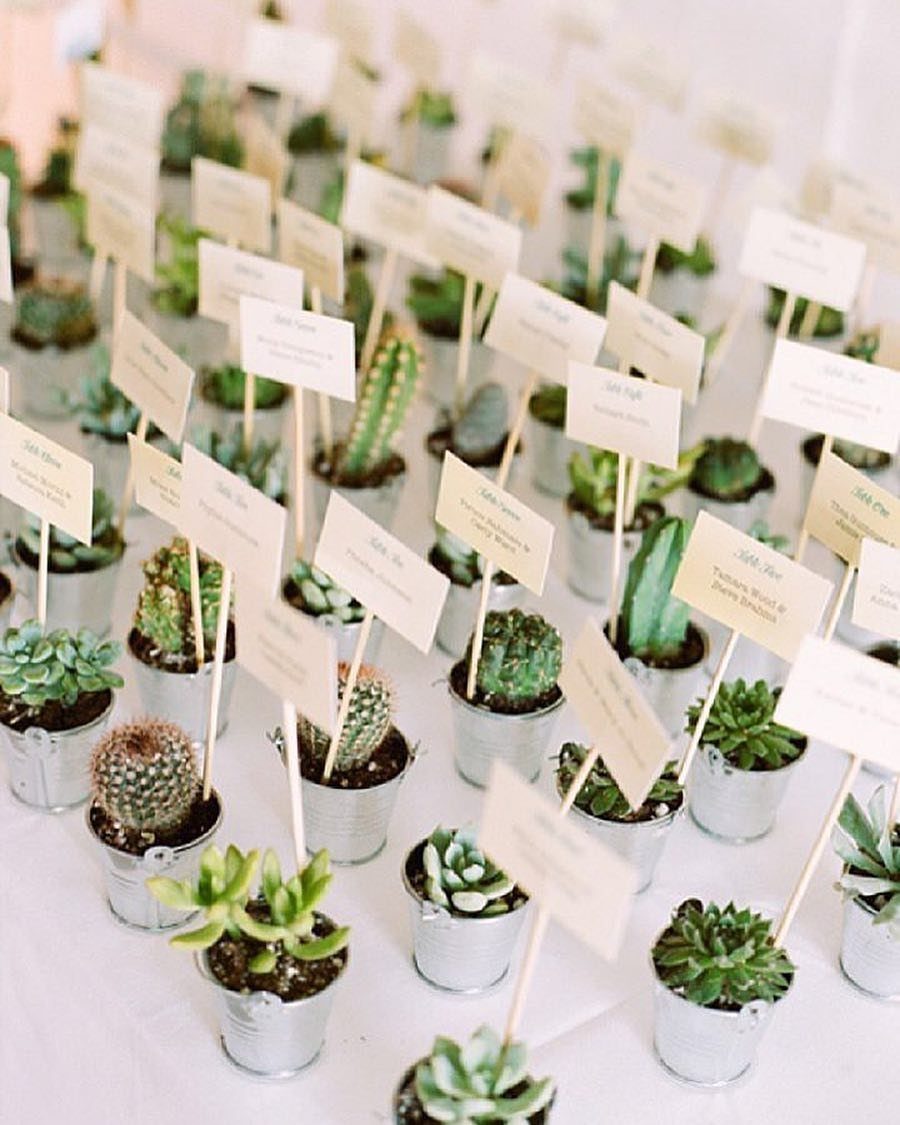
A live plant doubles as the escort card and the favor, so nothing gets tossed after dinner. Guests find their name on a small card clipped to a stick, then carry the succulent home in its metal pot.
Count pots against your guest list early, and add a few spares for typos or no-shows. Buying small succulents in bulk and tucking the name cards in yourself keeps this one affordable, even on a modest budget.
3. Festive Ornament Place Cards
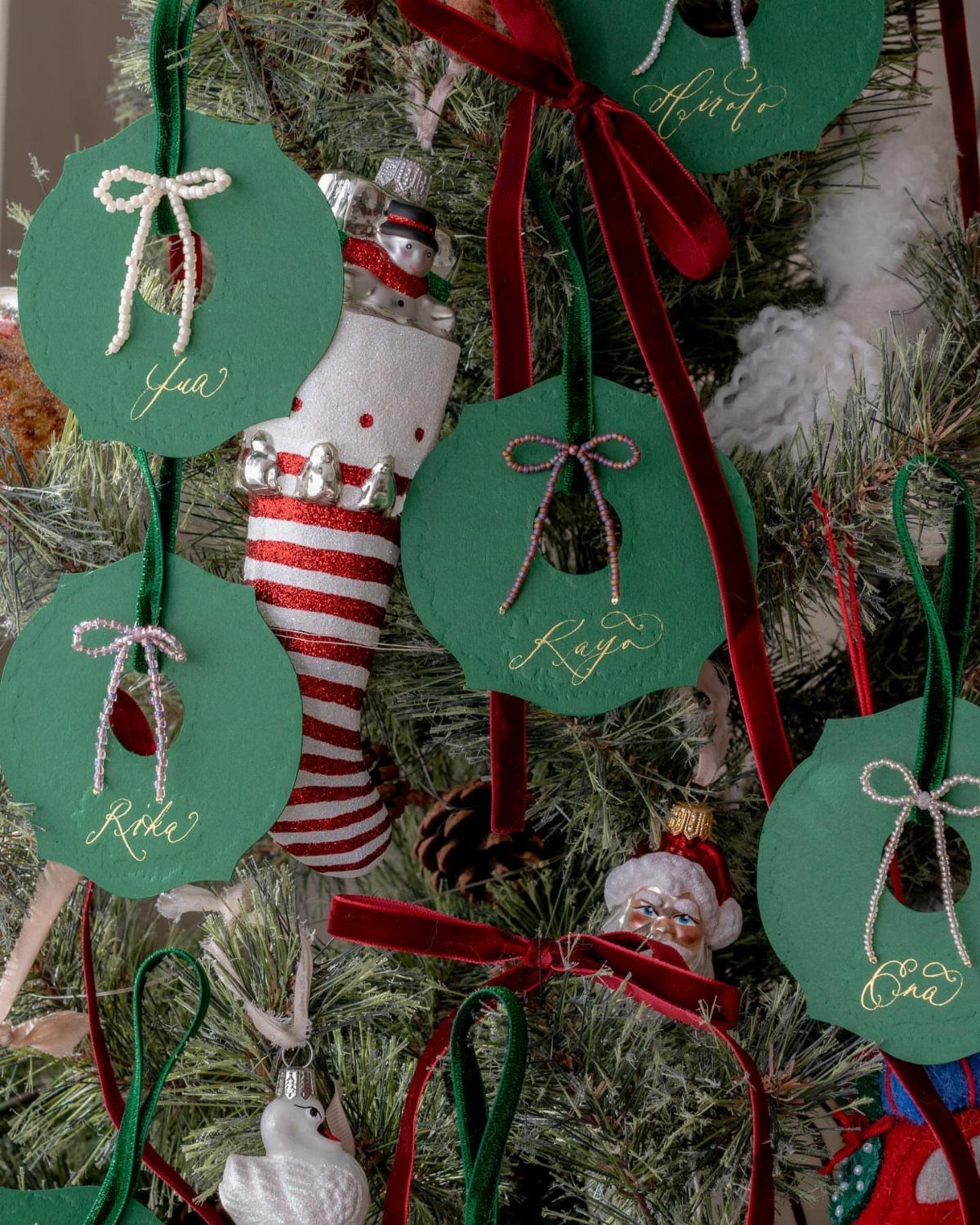
Hang ornaments on a tree, write each guest’s name on one in calligraphy, and the tree doubles as the seating chart. Guests hunt for their own name among the branches, which gives a winter reception a built-in icebreaker.
Write names in one metallic pen so the hand stays consistent across every ornament. Then tuck a table number onto each back, since a name alone does not tell anyone where to sit.
4. Selfie Mirror Seating Chart
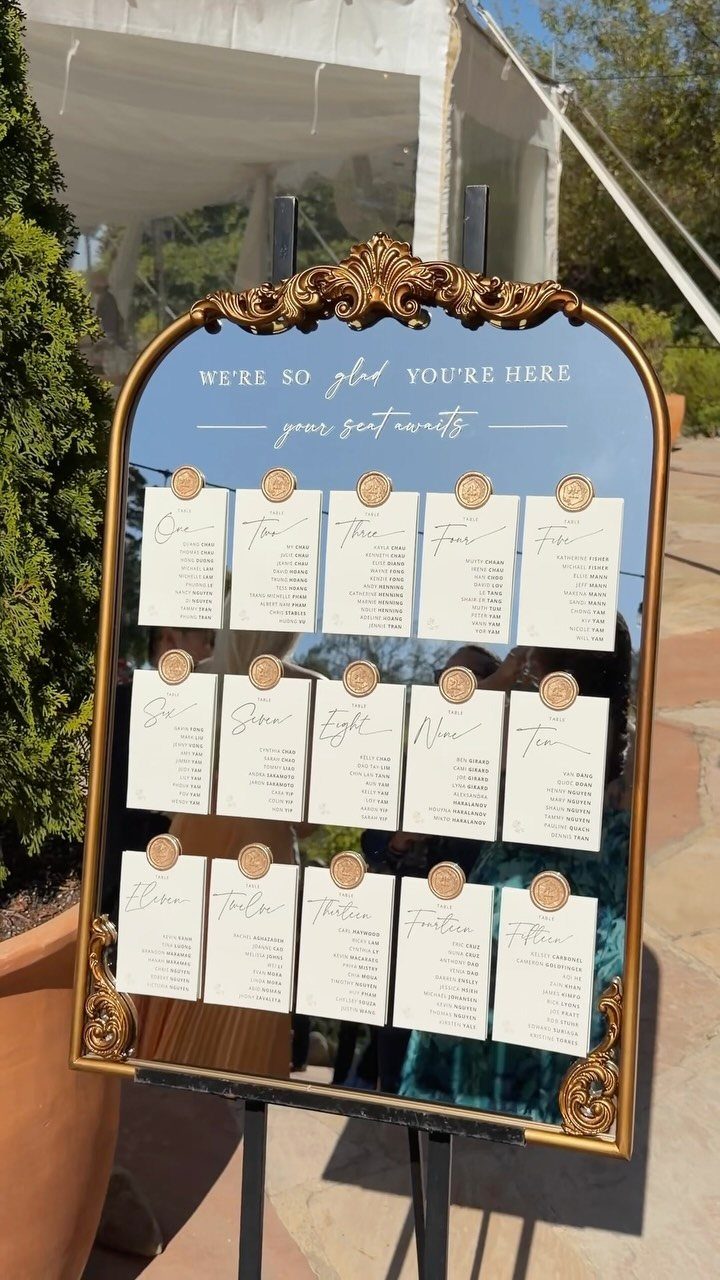
A mirror lets guests see themselves while they look for their table, and that small moment is why people linger and take photos.
Write the seating list on cards and pin them to the glass of a framed mirror, and the mirror becomes the chart guests check on arrival.
Keep the card text dark and large enough to read against your own reflection. A short greeting across the top, like "We’re so glad you’re here," makes the chart feel like a welcome, not a spreadsheet.
Although seating charts aren’t necessary, they are extremely helpful–especially if you are having a larger wedding. They make it much easier for your guests to navigate your venue and help you stay on schedule if you’re doing toasts, plated dinners, etc.
5. Round Banquet Tables
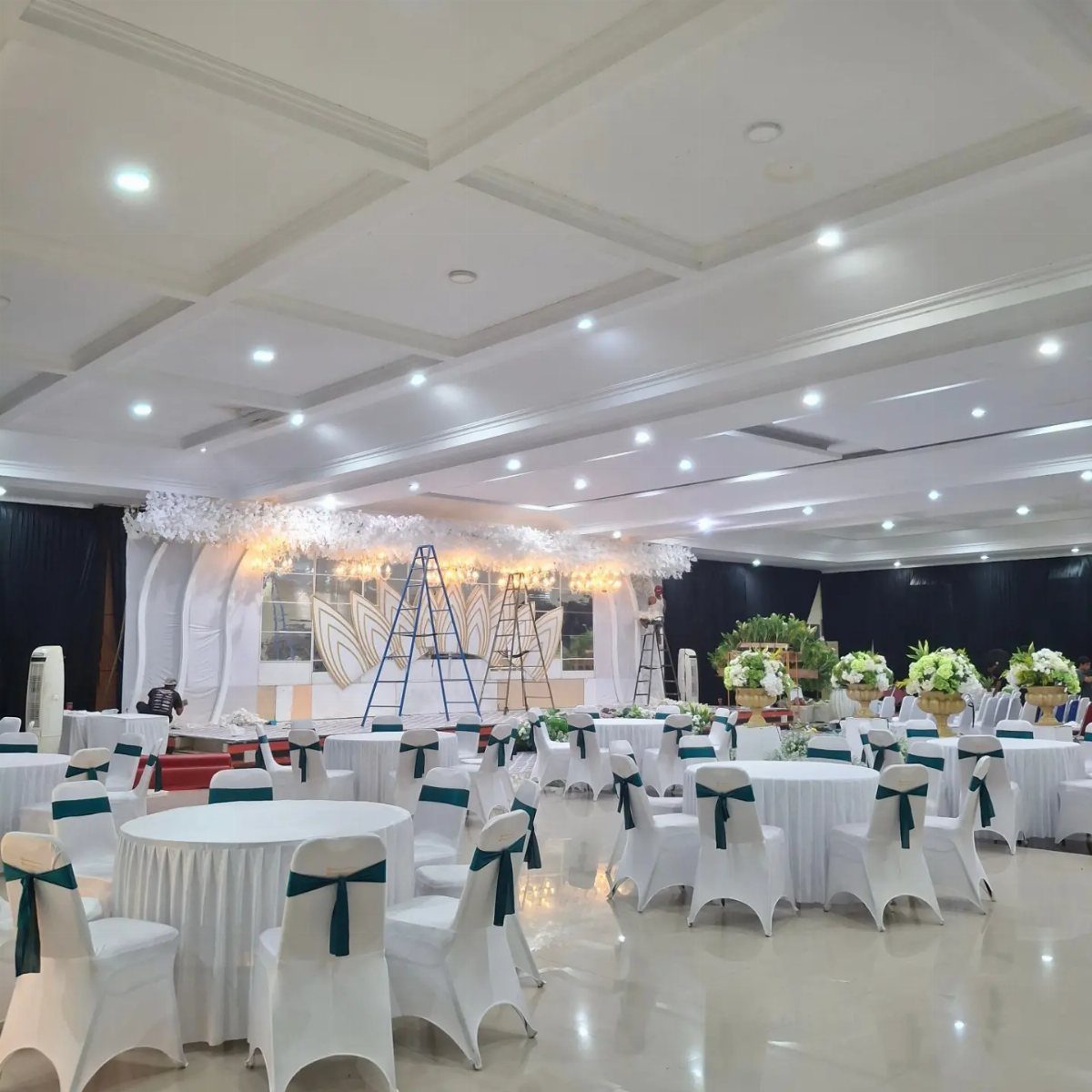
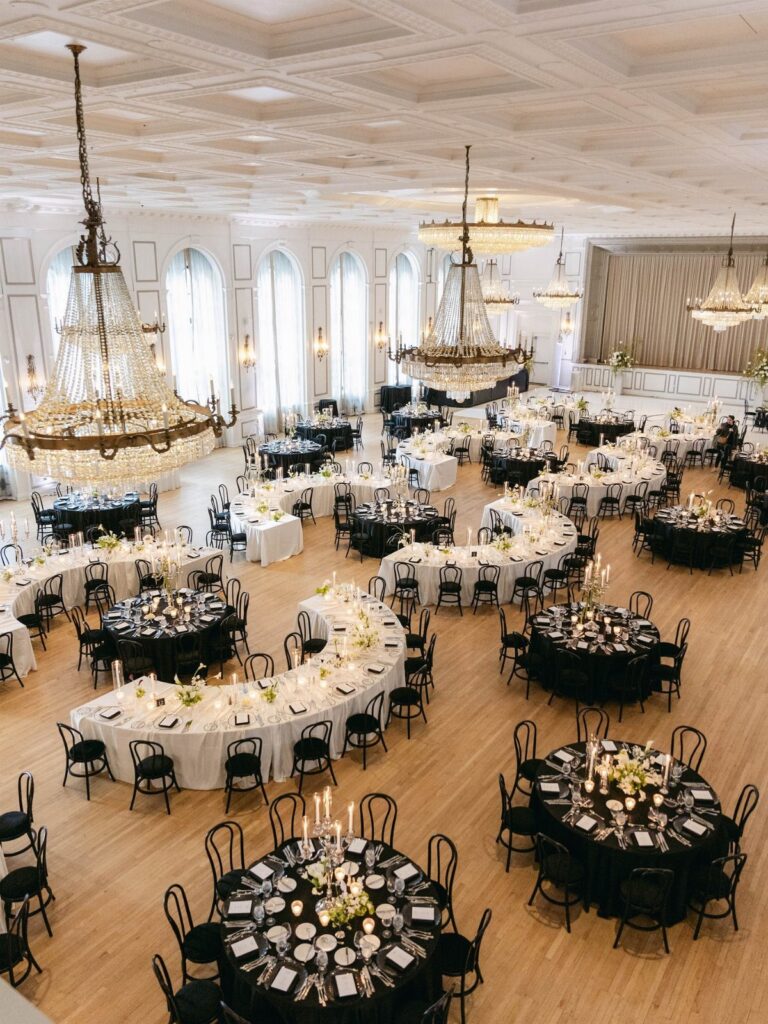
Round tables put every guest within sight of everyone else at the table, so conversation spreads without much effort from you.
Plain white linens and chairs tied with a ribbon in one accent color give a basic hall a clean, finished look at modest cost.
I would choose rounds for mixed groups, where relatives and friends who barely know each other need to talk. The ribbon is a cheap detail that does real work.
6. Picture Frame Seating Collage
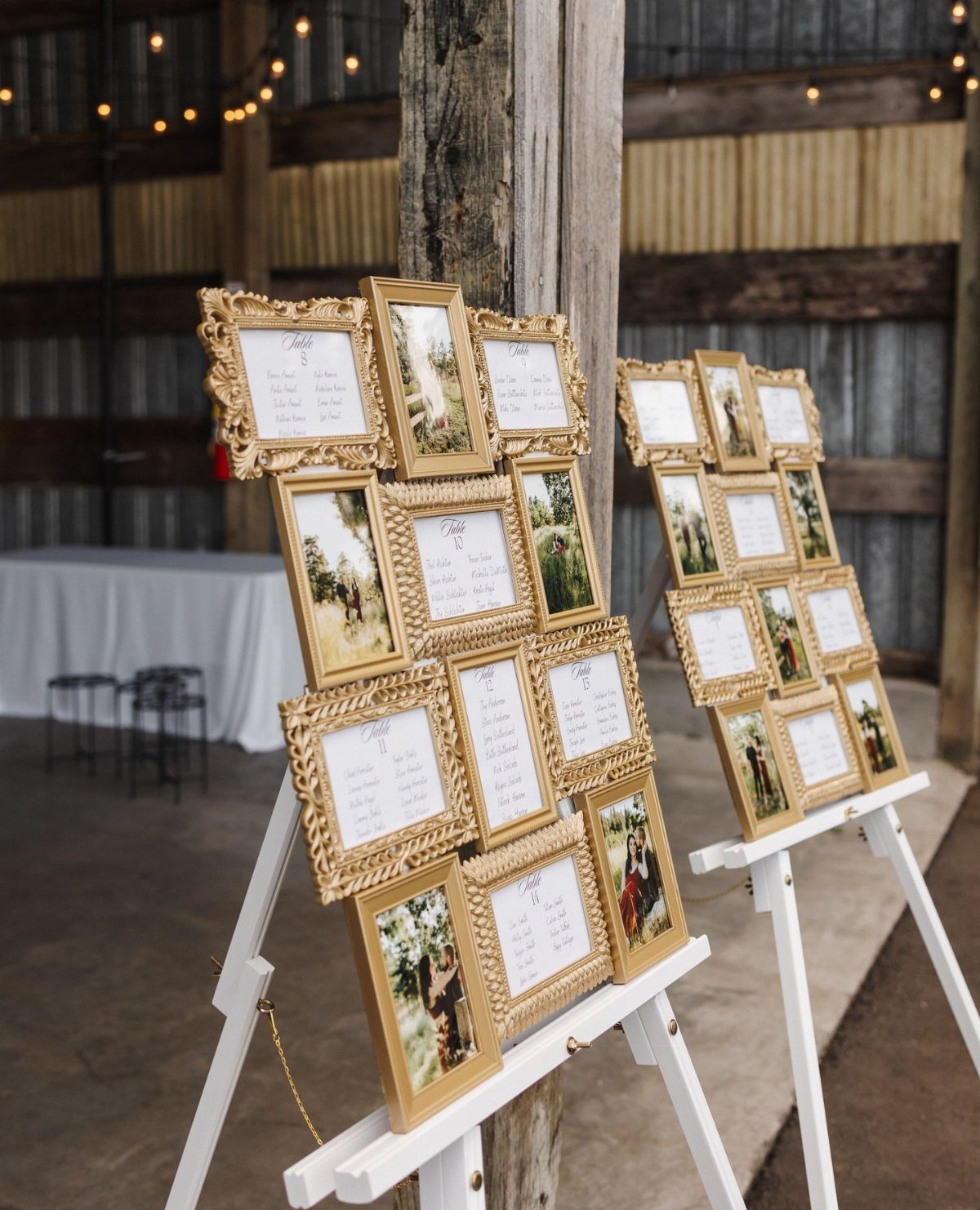
Gold picture frames on white easels let you build the chart out of pieces you can pick up secondhand and reuse at home later.
Slip a photo and a guest list into each frame, one frame per table, and the display reads as decor first and a chart second.
Mix frame sizes for a collage feel, but keep every frame the same metal finish. Print the lists in one font so the whole arrangement looks planned, not gathered.
7. Shot Glass & Lime Escort Cards
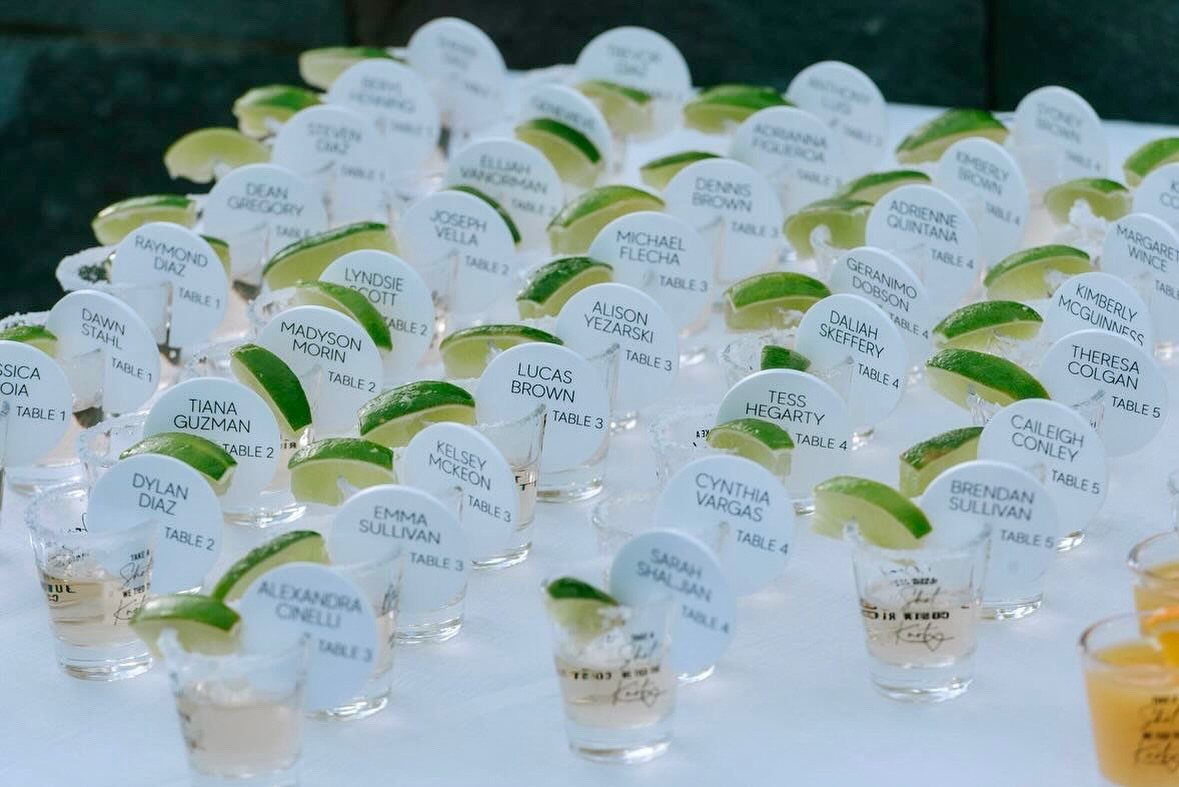
Each shot glass holds a clear drink, a lime wedge and a round name card with the guest’s name and table number, so the escort card is also the first drink of the night.
Guests pick up their glass, read the table number and head over.
Print the cards in one font and keep the table number as large as the name. Plain shot glasses run cheap in bulk, which suits a modest budget.
8. Vintage Window Pane Seating Display
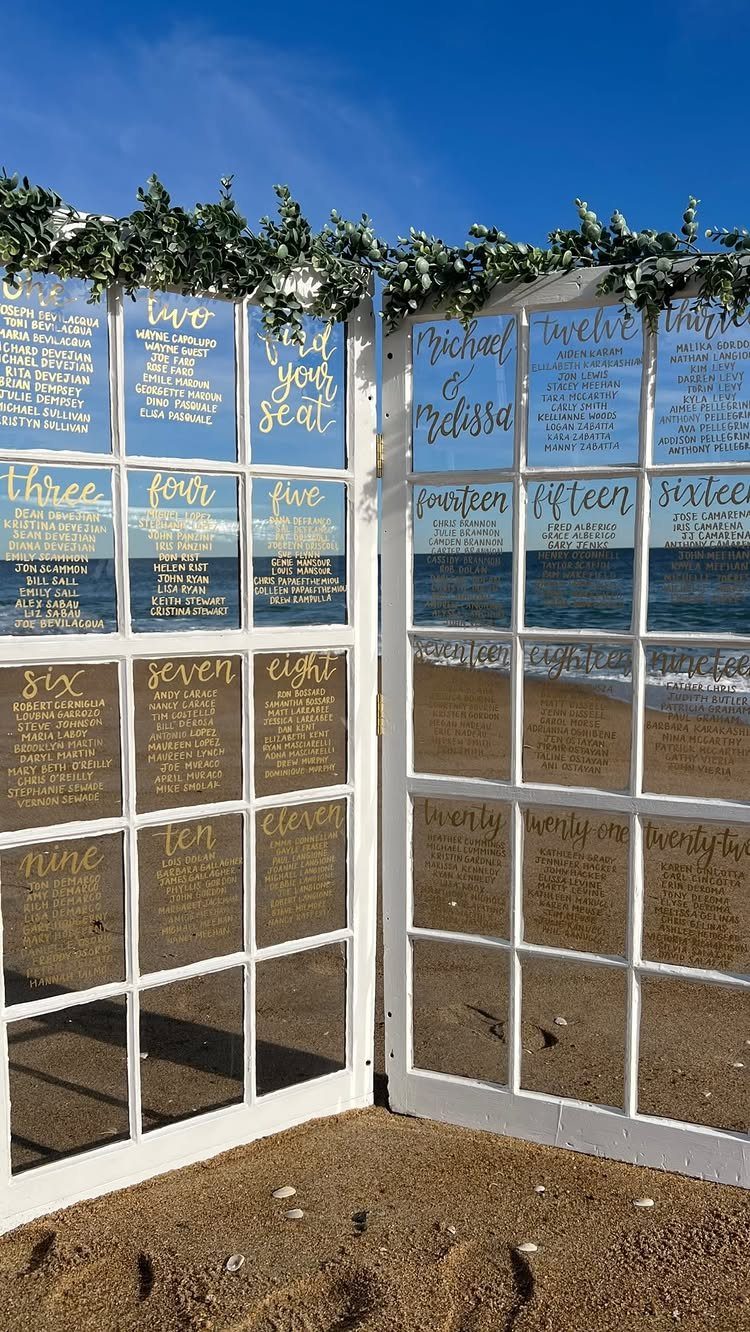
An old white window frame turns the glass into the chart. Names and table numbers go right on the panes, and a loop of greenery across the top makes it read as decor before anyone looks for a seat.
Write on the glass with a paint pen, and test a corner first so the lettering is dark enough to read. I would give each table its own pane, which keeps the lists short and easy to scan.
9. Cocktail-Style Seating
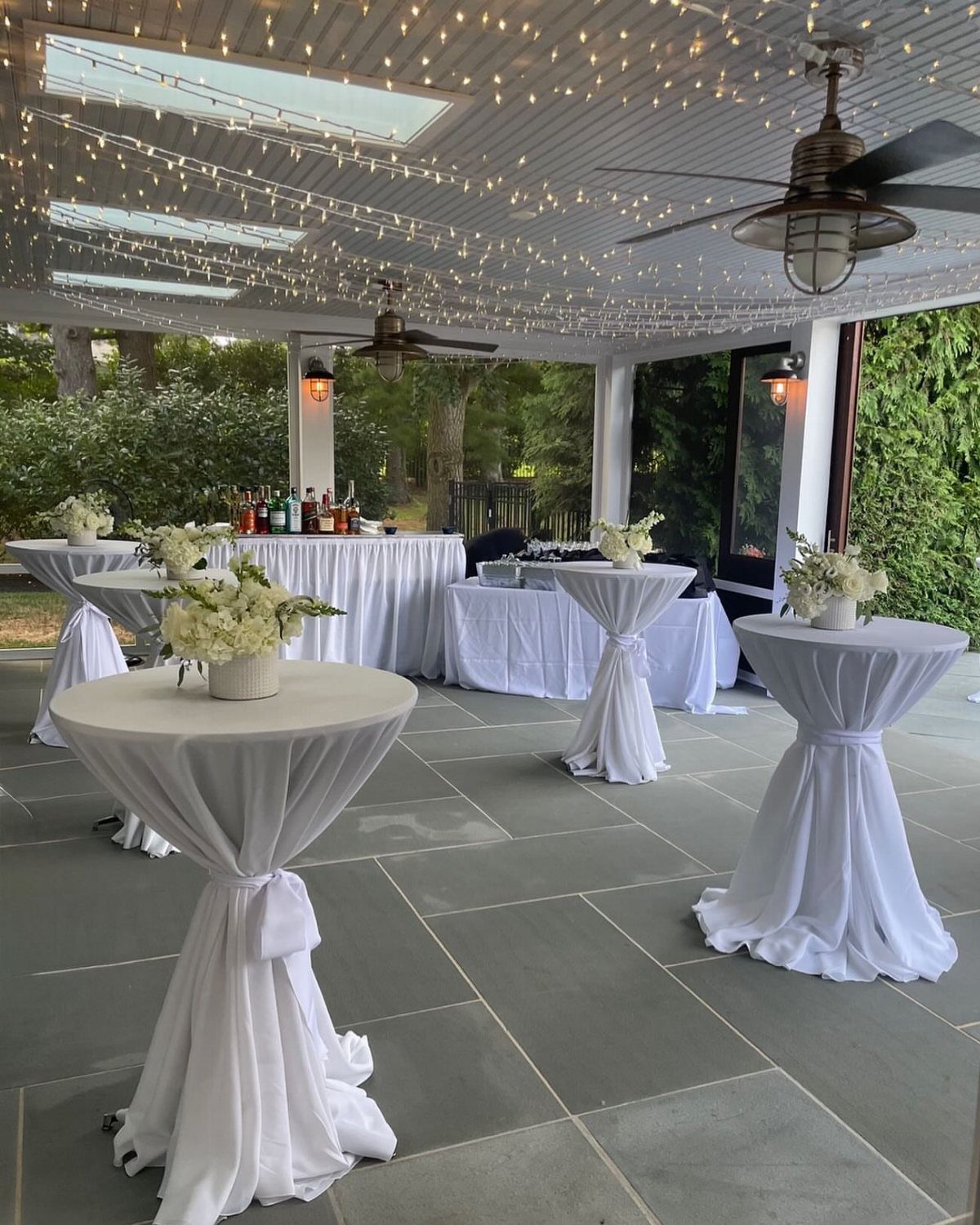
High-top tables keep guests on their feet, drifting between the drink station and each other. Cocktail tables need less: a linen and one small arrangement per table give enough finish.
Plan fewer tables than guests, since people will stand and circulate.
Good lighting matters here, and the string lights overhead do that job. I like this style for a relaxed reception where mingling matters more than a seated dinner.
10. Long Banquet Tables
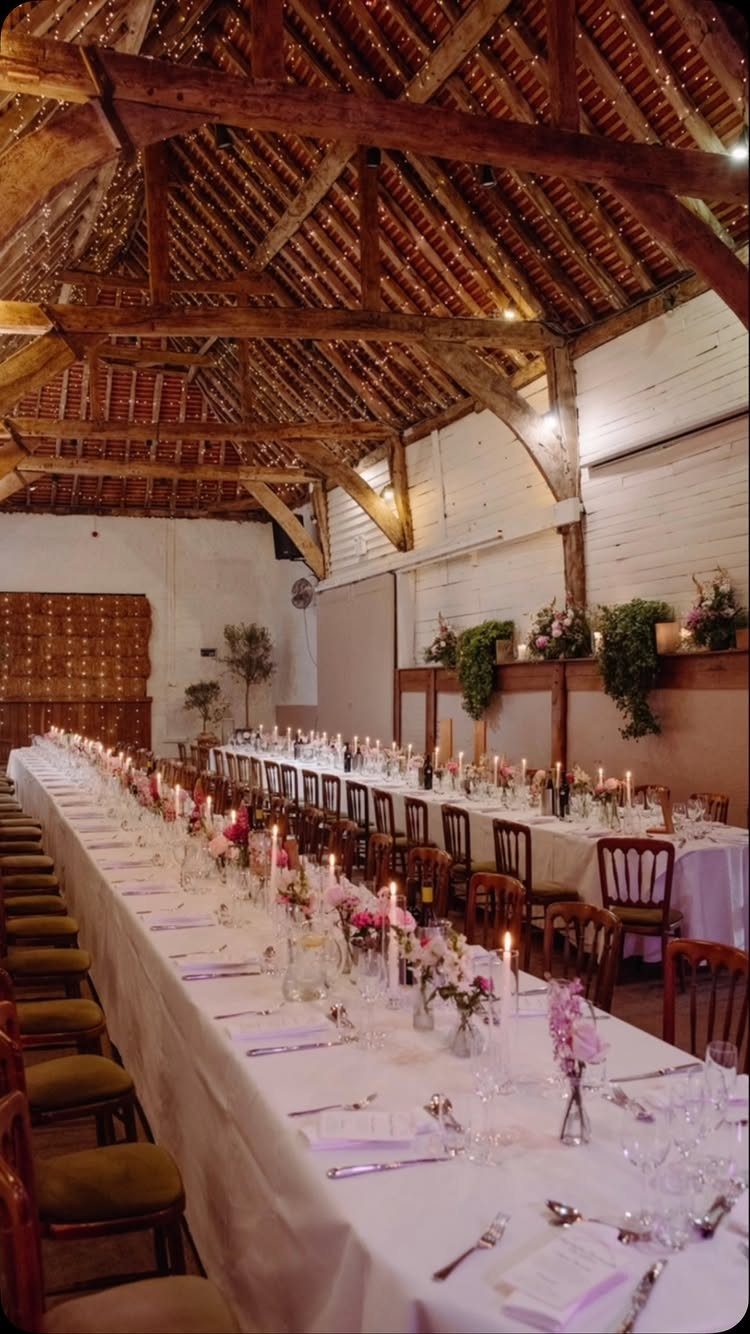
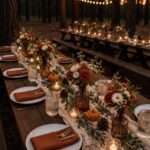
Long tables seat guests shoulder to shoulder, which makes dinner feel like one big family meal. A long cloth, candles and low centerpieces down the middle are enough to dress the table without fighting the room.
Keep the centerpieces low so people can talk across the table.
Leave the center clear enough for shared platters, if you plan to serve family style. Seating cards are still worth using, so no one hovers at the end of a row.
11. Theatre-Style Seating
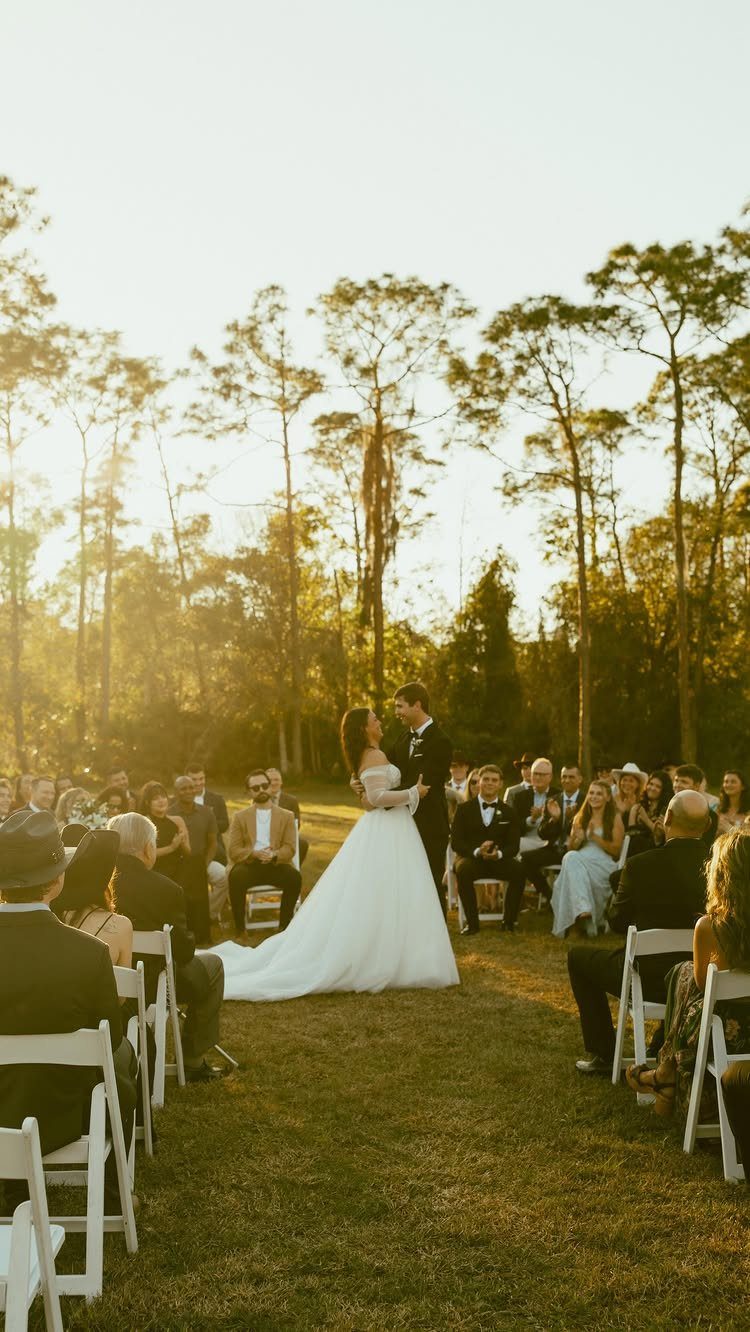
Rows of white folding chairs facing one direction put every guest’s eyes on the couple.
Folding chairs are among the cheapest rentals, which helps a modest budget.
Mark the first rows for immediate family so they are not scrambling when guests arrive. Older relatives do best near the aisle, where getting in and out is easiest.
12. Record Seating Chart
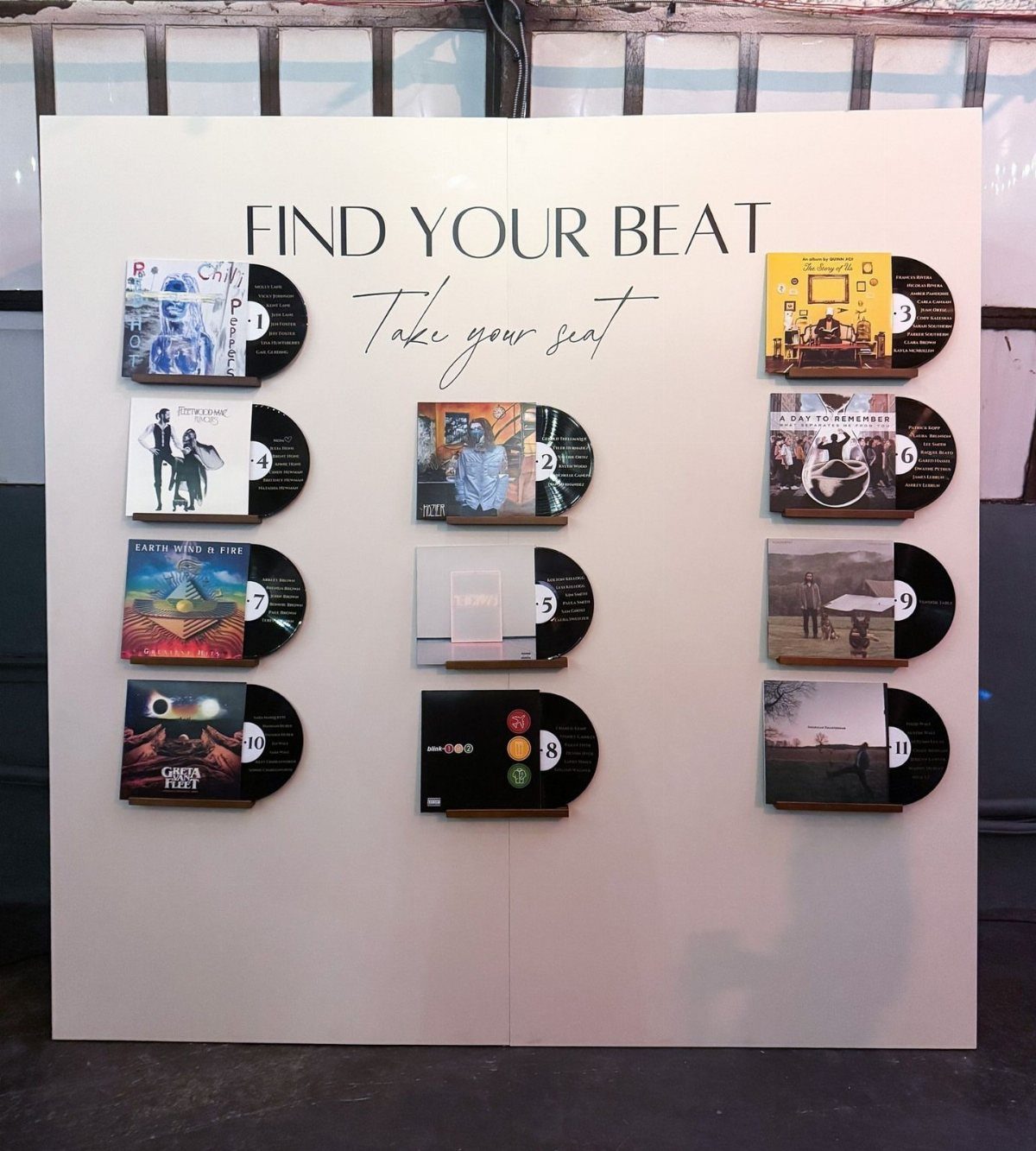
Vinyl records in sleeves work as a seating chart when each one carries a table number and its guest list. A bold line across the top, like "Find your beat," ties the display to the music.
Secondhand records are the cheap route, and you can pick ones you like.
Print the lists in one font, and stick them to the sleeves so they stay put. 12 records fill a wall nicely, so match the count to your tables.
13. Butterfly Seating Chart

Pastel butterfly cutouts on sticks turn a flower arrangement into the escort display. Each guest’s name is printed on a wing, and guests pull their butterfly from the blooms like picking a flower.
Print every name in one font, and keep the pastels in a tight family so the butterflies match the flowers. Cutouts are paper, so this stays cheap for a modest budget.
14. Handwritten Notes Seating Display
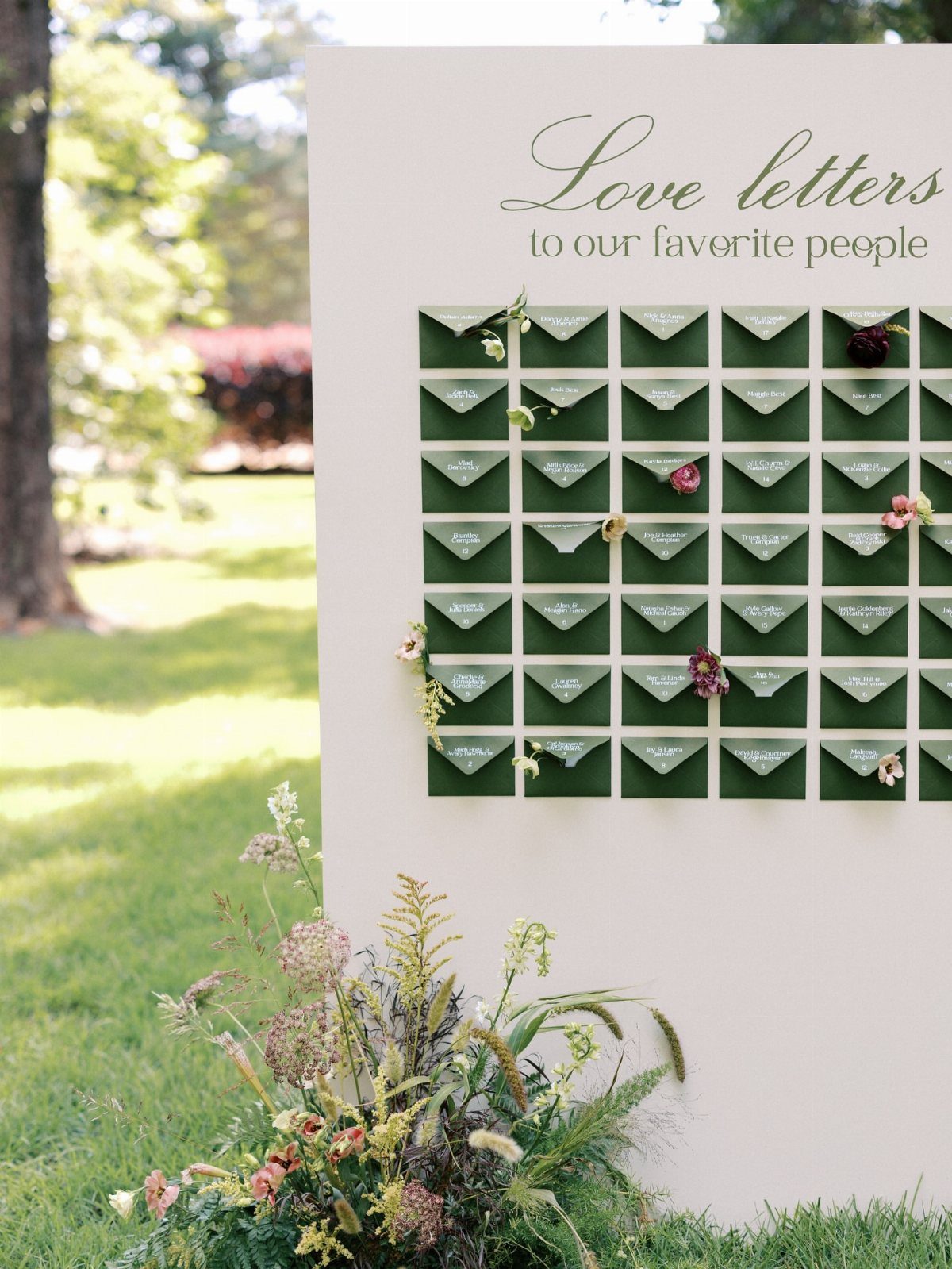
Green envelopes on a white board, one per guest, make the seating chart feel like mail meant for each person.
Under a title like "Love letters to our favorite people," guests find their envelope and open it to learn their table.
Put the name on the outside and the table number on the note inside.
I would add a few lines of your own to each note, which is the whole charm, though it costs real writing time on a long guest list.
Seating Chart Etiquette
Seat family first, then deal with friends. The traditional table holds you, your partner and both sets of parents, though plenty of couples skip that and sit alone at a sweetheart table instead.
Divorced parents change the math. Build a second head table so each parent has a place of honor without sitting next to the other.
Past family, think about who will actually enjoy each other. Not every guest knows, likes or gets along with every other, and a mismatched table turns into a pocket of awkward silence or worse.
Match people by shared interests: put a skiing aunt beside a friend fresh off a ski trip, and seat college friends together so they can catch up.
Creating a Floor Plan
Get the floor plan from your venue first, before you start placing anyone. Knowing how many tables fit comfortably tells you early whether your guest count and your table style can coexist.
Venue staff have run many receptions in that room, so ask which arrangements work best there. Their answer can save you from a plan that looks good on paper and jams the walkways.
Then draw the room to scale.
Mark the bar, the kitchen, the dance floor and every table, plus practical details like outlet locations for a DJ or band. A scaled plan shows problems before you pay for rentals, and moving a paper table costs nothing.
Guest List Organization
Start the guest list early and group people as you add them: college friends, family, colleagues, wedding party. That small habit pays off when you begin shuffling names between tables.
Add a "specific needs" group too, and give it real attention. Mark down who needs to stay close to a bathroom, who has limited mobility, and who should be near the speakers or away from them depending on their hearing.
For the chart itself, you can list guests alphabetically by last name or group them by relationship.