The 12 ideas run from a bare wooden arbor on a lakeside lawn to a custom geometric shape that can cost more than a standard arch, and the setting you’ve already booked decides which one is yours.
A tree-centered altar suits an open field, a floral canopy suits a covered space, and a vintage door looks wrong in a formal room, so match the altar to the place before you fall for a photo.
Your venue’s walls, ceiling and light should narrow these 12 ideas before your taste or budget does, since a teepee or a floral canopy needs room and cover that a small space may not give.
1. Geometric Altar
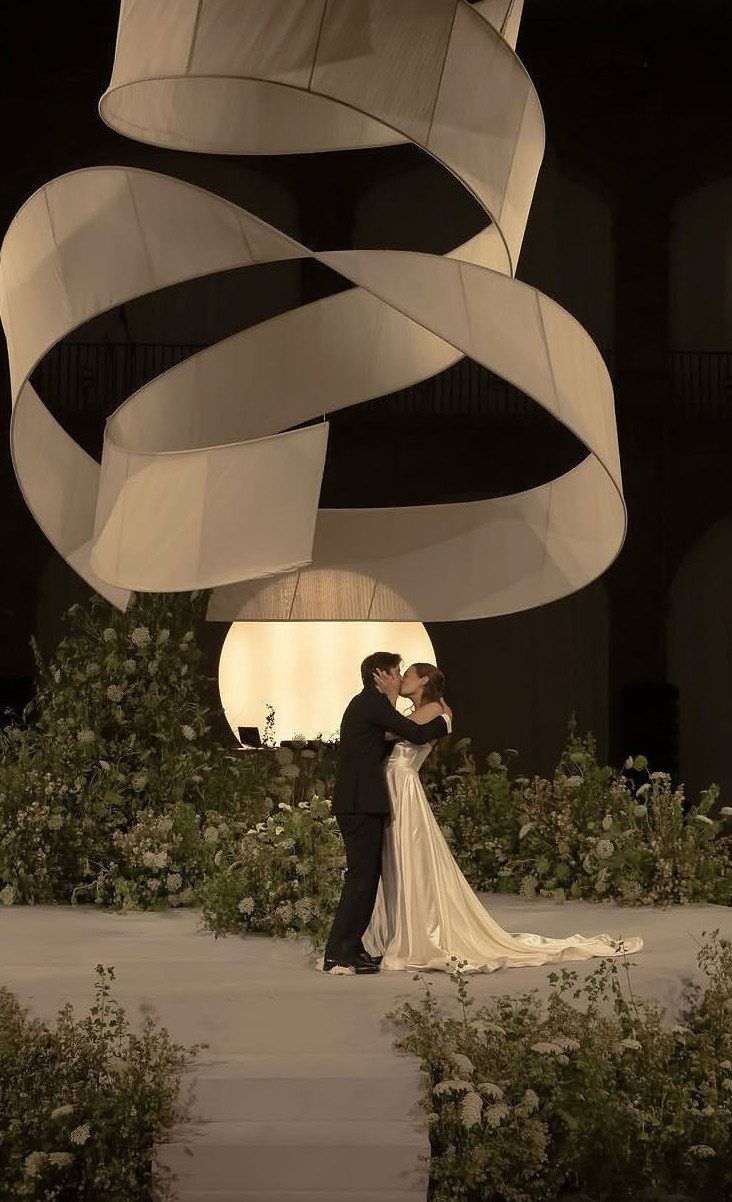
A geometric altar trades flowers-on-a-frame for a sculpted shape, and the ribbon-like white form does most of the work alone. Because the structure is the statement, I would keep the flowers low and white so the lines stay readable.
Modern venues with clean walls suit it best. Ask whoever builds it how the piece is supported and how long setup takes before you commit, since custom shapes can cost more than a standard arch.
2. Wooden Arbor
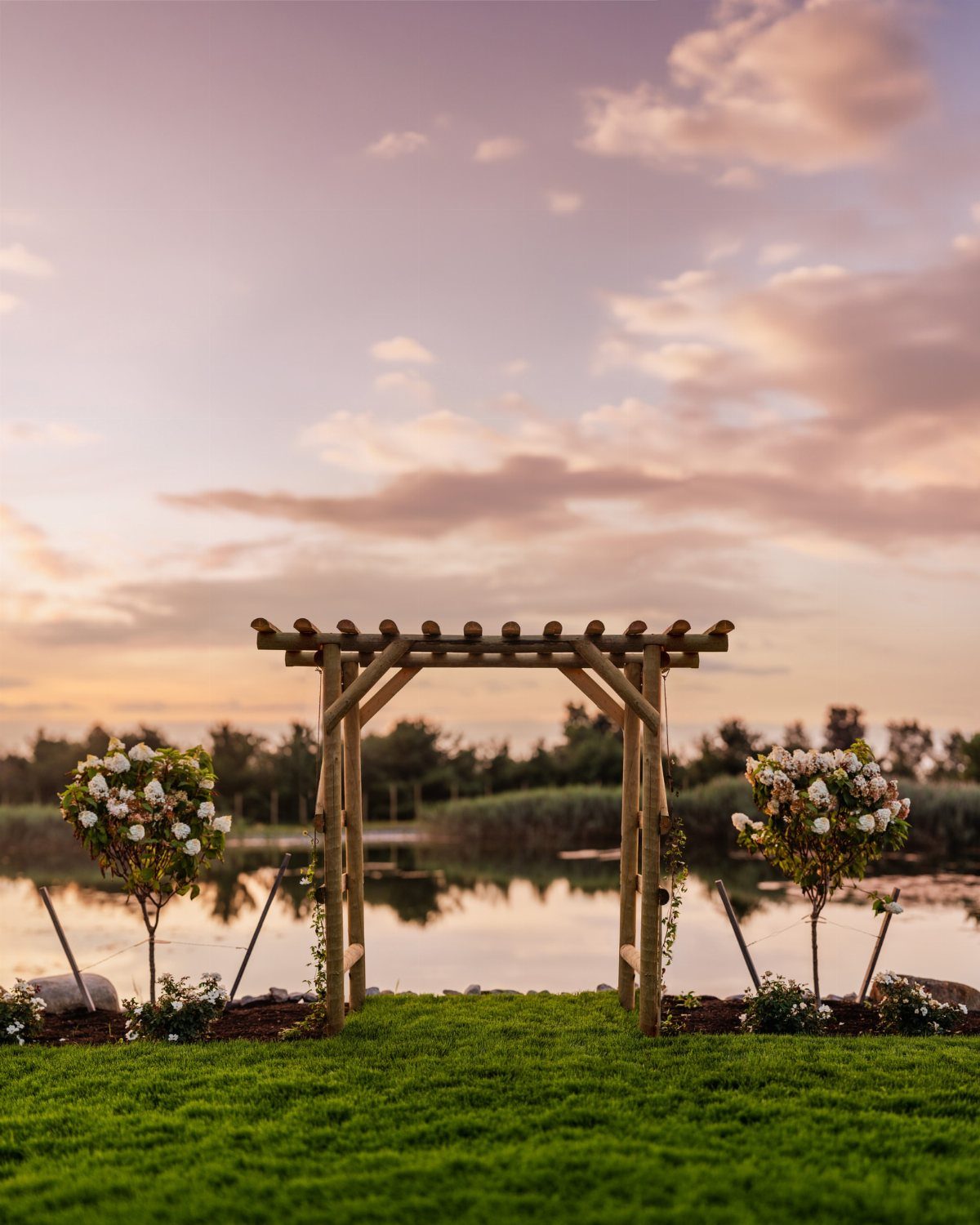
Open ground and a view do half the styling for a wooden arbor. A lakeside lawn like this one needs little more than a plain frame and a bush or two on either side.
My pick is to leave the wood bare if the setting is already beautiful, then add flowers or fabric only if you want color.
Plain wood also works across many outdoor venues, so it is an easy first option to price.
3. Draped Fabric Altar
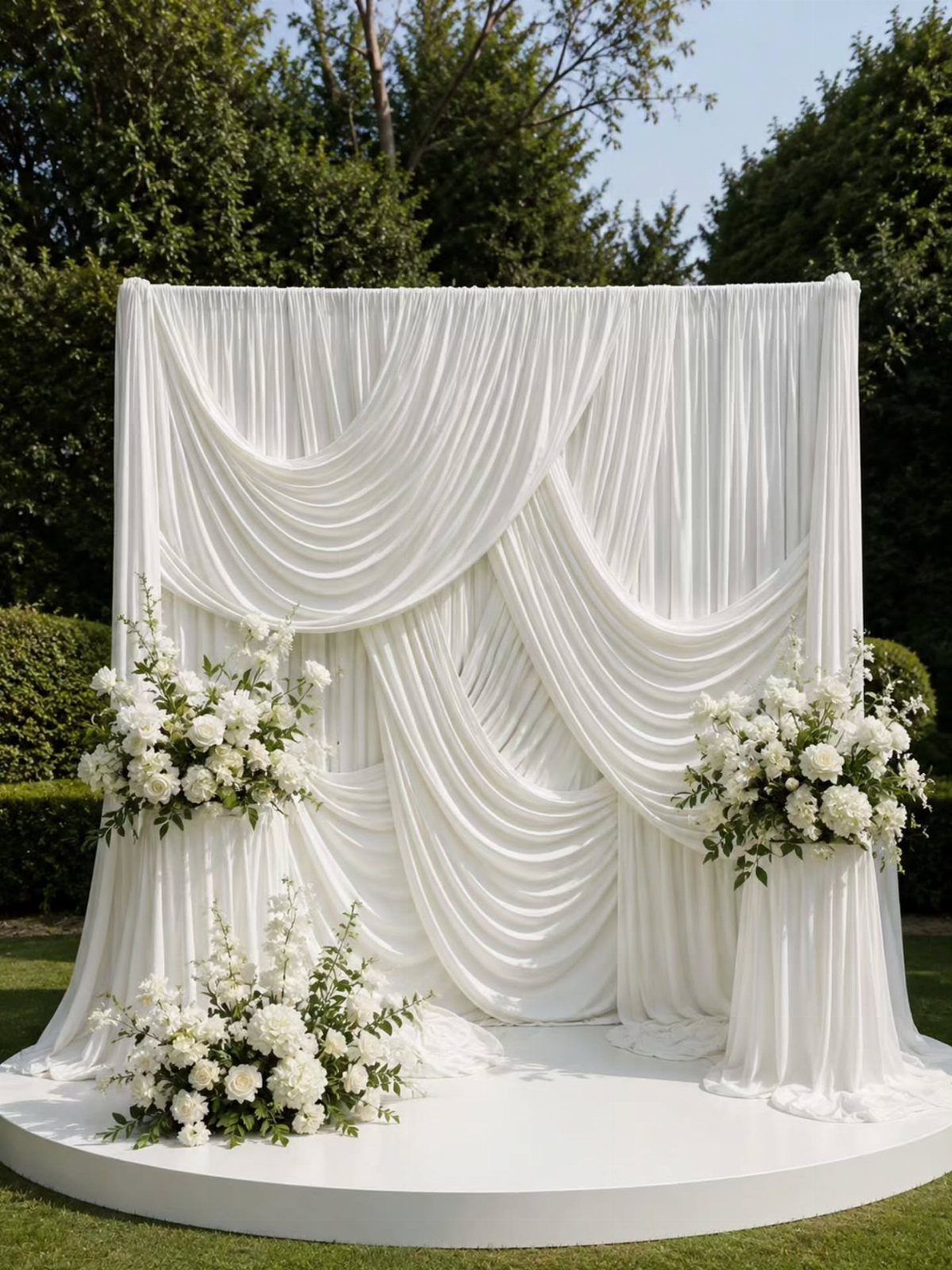
Fabric softens a ceremony spot faster than almost any other material. White drapes behind a low circular platform, with white arrangements at the base, make a quiet backdrop that lets the trees behind it stay the color.
I would choose a light, flowing fabric over a stiff one, so it moves a little. Keep flowers white or very pale to match, and plan for outdoor wind when you decide how the drape is secured.
4. Circular Arch
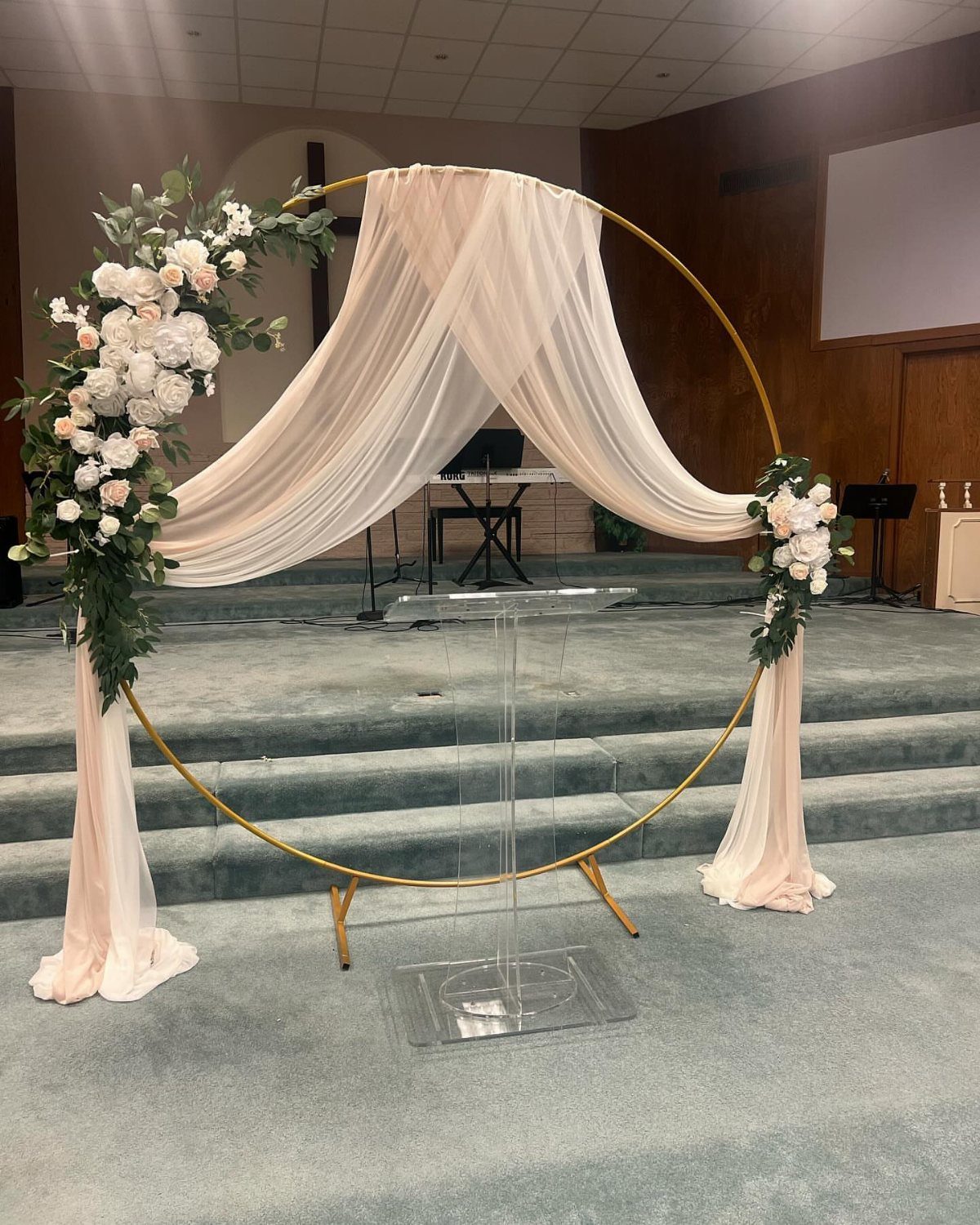
A ring has no beginning or end, which is why a circular arch reads as eternity and unity without any explanation. Gold is the finish here, and it warms up pale fabric and white flowers nicely.
Drape one side or the lower curve rather than the whole circle, so the shape still shows. A clear acrylic podium keeps the officiant’s stand from competing with the arch.
5. Tree-Centered Altar
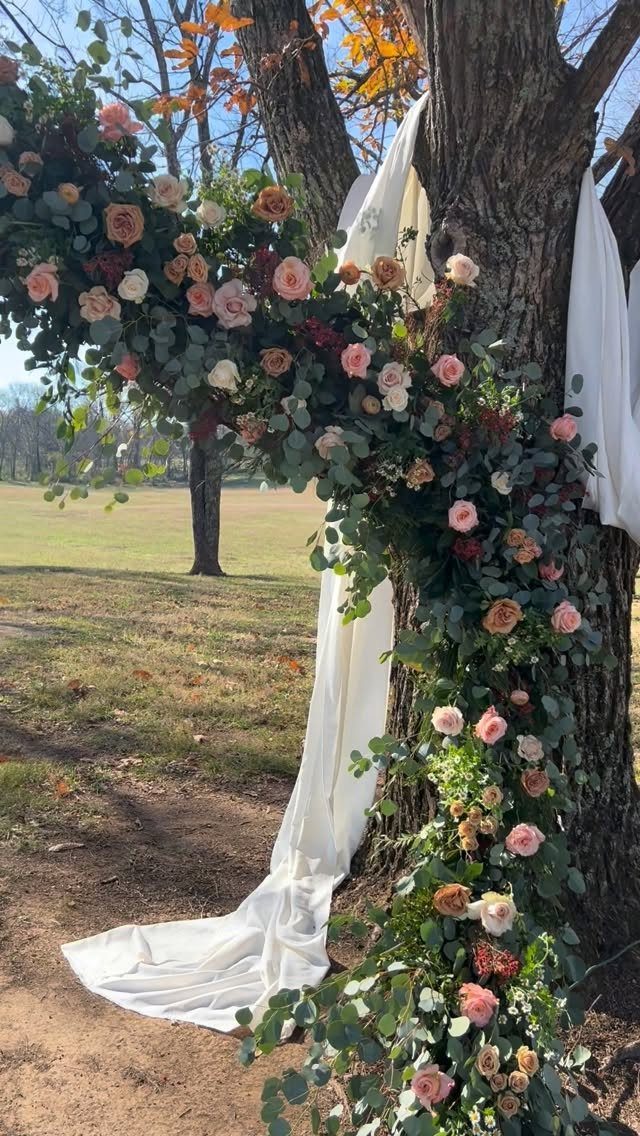
Skip building a structure at all: a real tree trunk is already the focal point.
Asymmetry suits a trunk better than a matched pair of arrangements. Pick a tree in an open field with room to stand in front of it, and choose rose colors that stand out against the bark.
6. Floral Arch
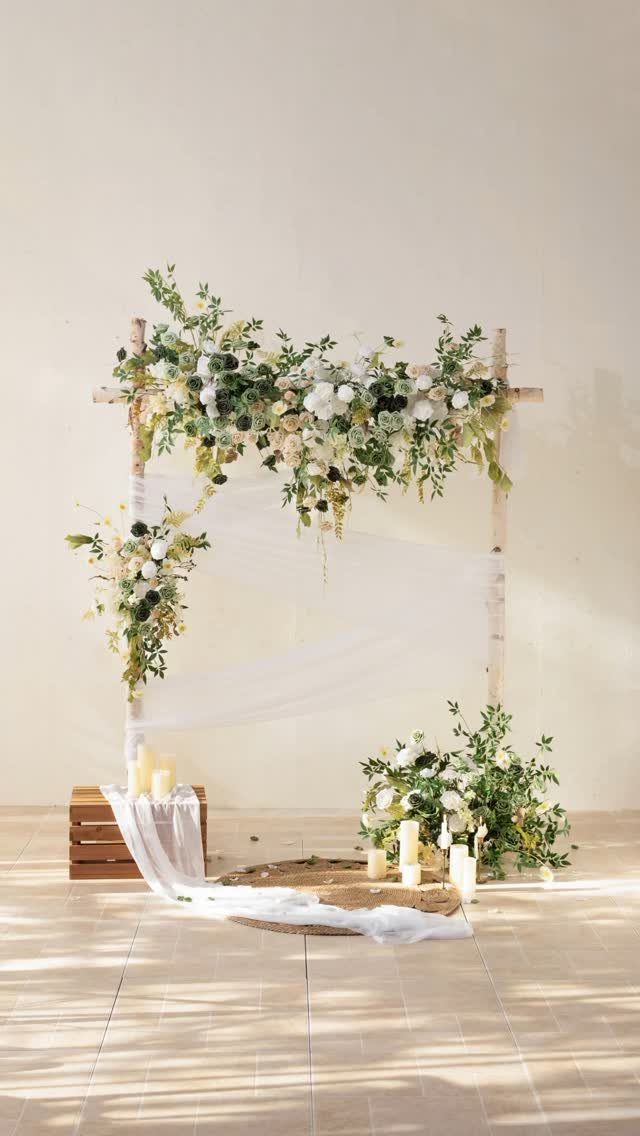
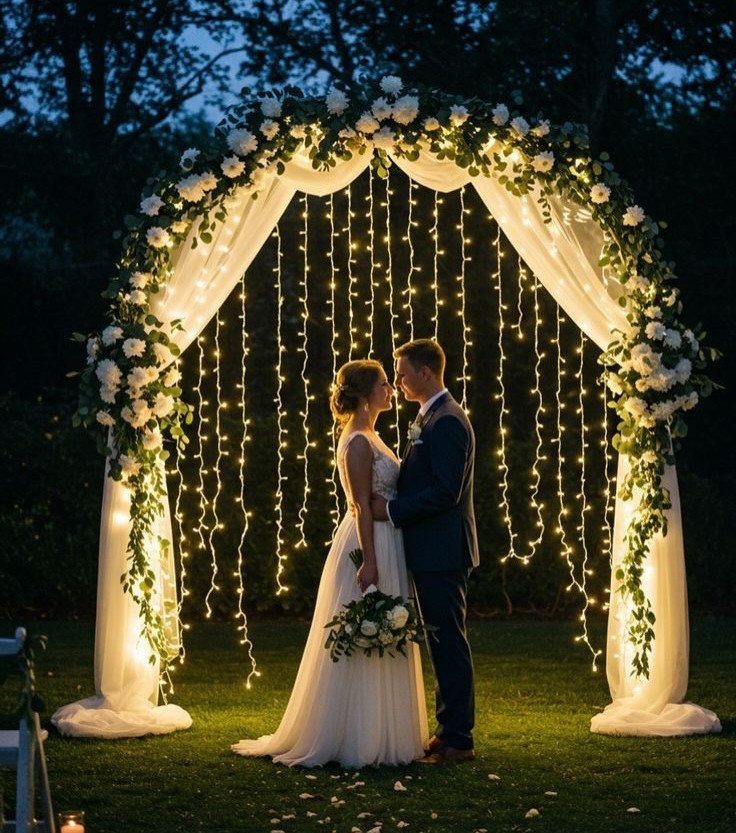
Few designs read as romantic as a wooden frame wrapped in white flowers, greenery and sheer fabric. It is the classic for a reason: the frame gives you structure, and the soft layers keep it from feeling stiff.
Candles on the floor and on a crate add height variety at the base. Against a plain wall, the florals do all the decorating, so spend your budget there.
7. Vintage Door Altar
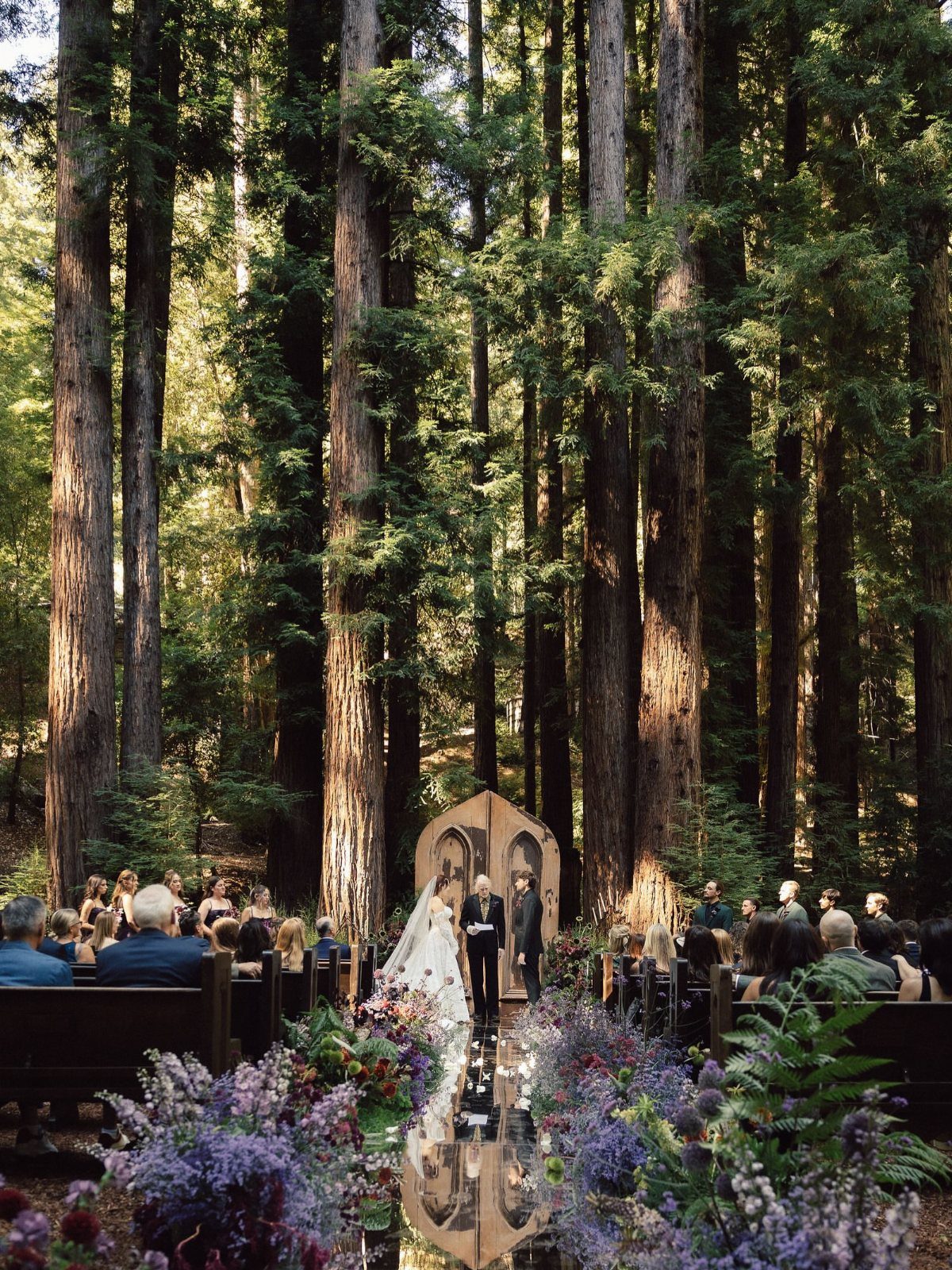
An old wooden door standing alone in a forest gives the ceremony a doorway to walk toward, and the couple gets a frame with age already built in.
Against tall redwoods, weathered wood and deep purple flowers feel at home together.
I would keep the door itself clear and put the flowers in the pews and at its base.
Ask where the door will stand and how it will be held upright before you commit, since a freestanding door needs a firm base.
8. Floral Canopy
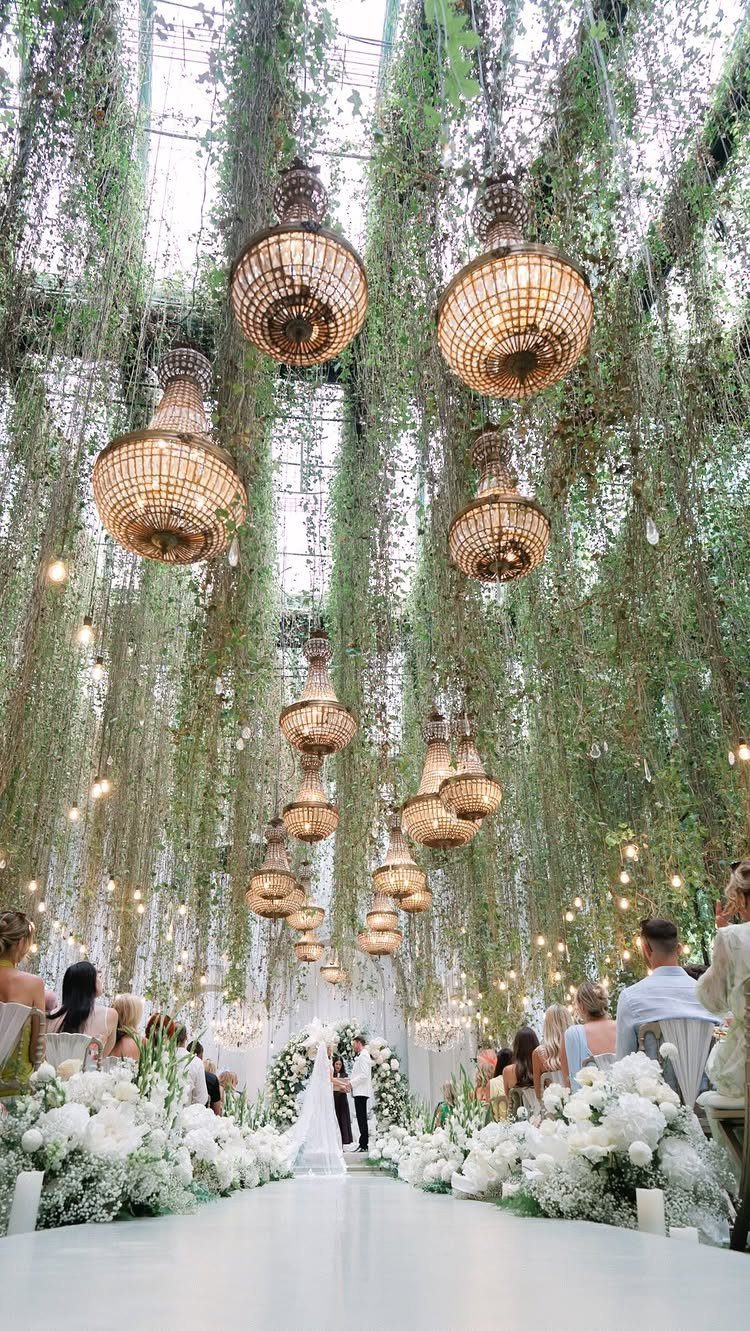
A canopy of flowers and greenery hung overhead gives an open aisle a ceiling, and it works best in a greenhouse or under a tent, where the plants can hang from beams or wires that are already there.
Gold chandeliers among the greenery add a warm light that white arrangements below pick up.
Overhead pieces are only as good as their anchor points, so check with the venue about what can safely hold weight.
My pick is to keep the aisle flowers white and simple, since the canopy carries the drama and the budget should follow it.
9. Minimalist Greenery Altar
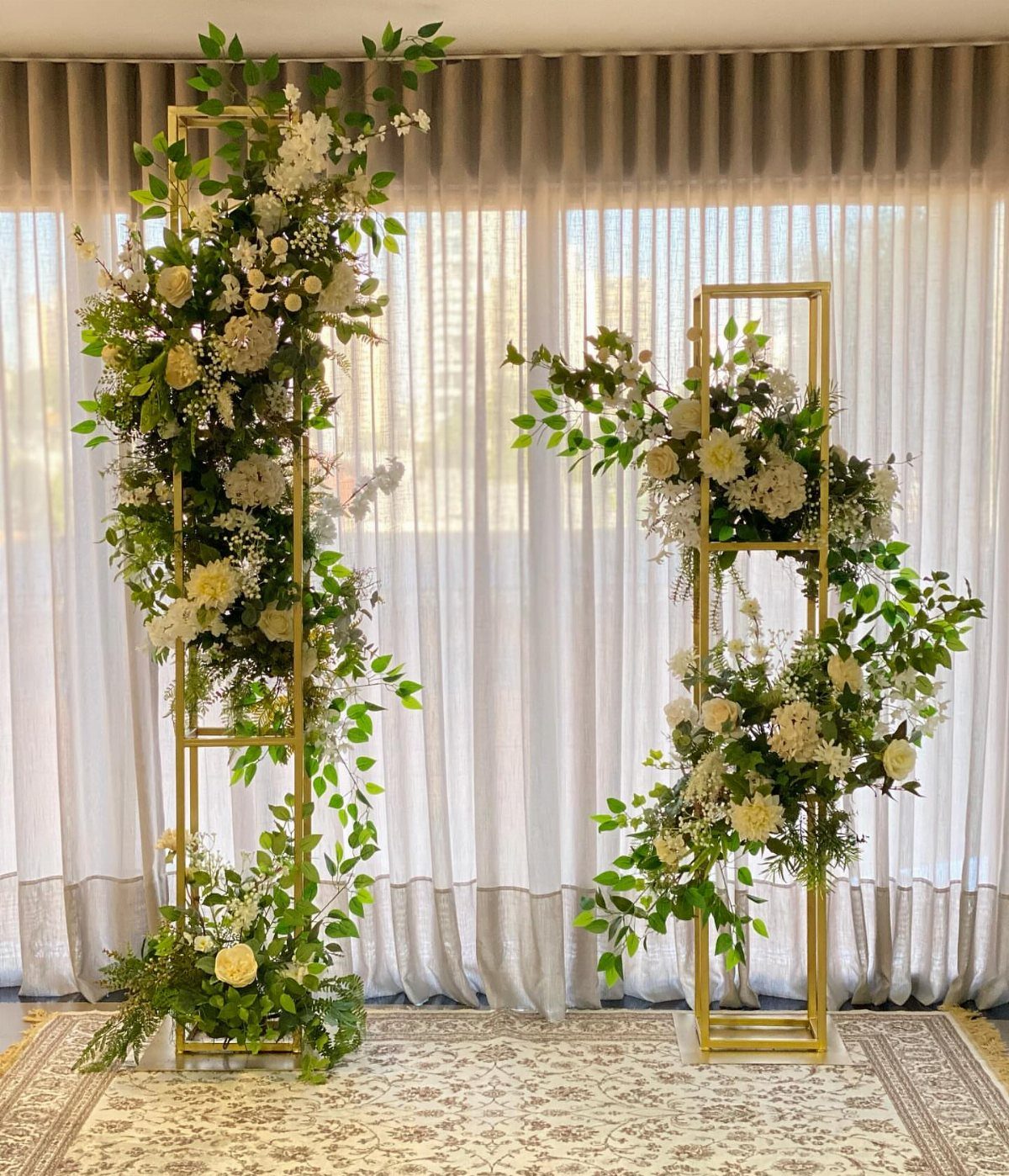
A minimalist altar can be as simple as 2 gold rectangular frames, a handful of white blooms and some loose green foliage, which keeps the floral bill low and still reads as intentional.
Sheer curtains hung behind the frames soften the backdrop, and a patterned rug on the floor can carry all the pattern, so the flowers and frames stay clean.
I like this for a small ceremony where every element has to earn its place. Fewer flowers means a smaller bill, and the frames can be wrapped in only one side of greenery if you want even less.
10. Teepee Altar
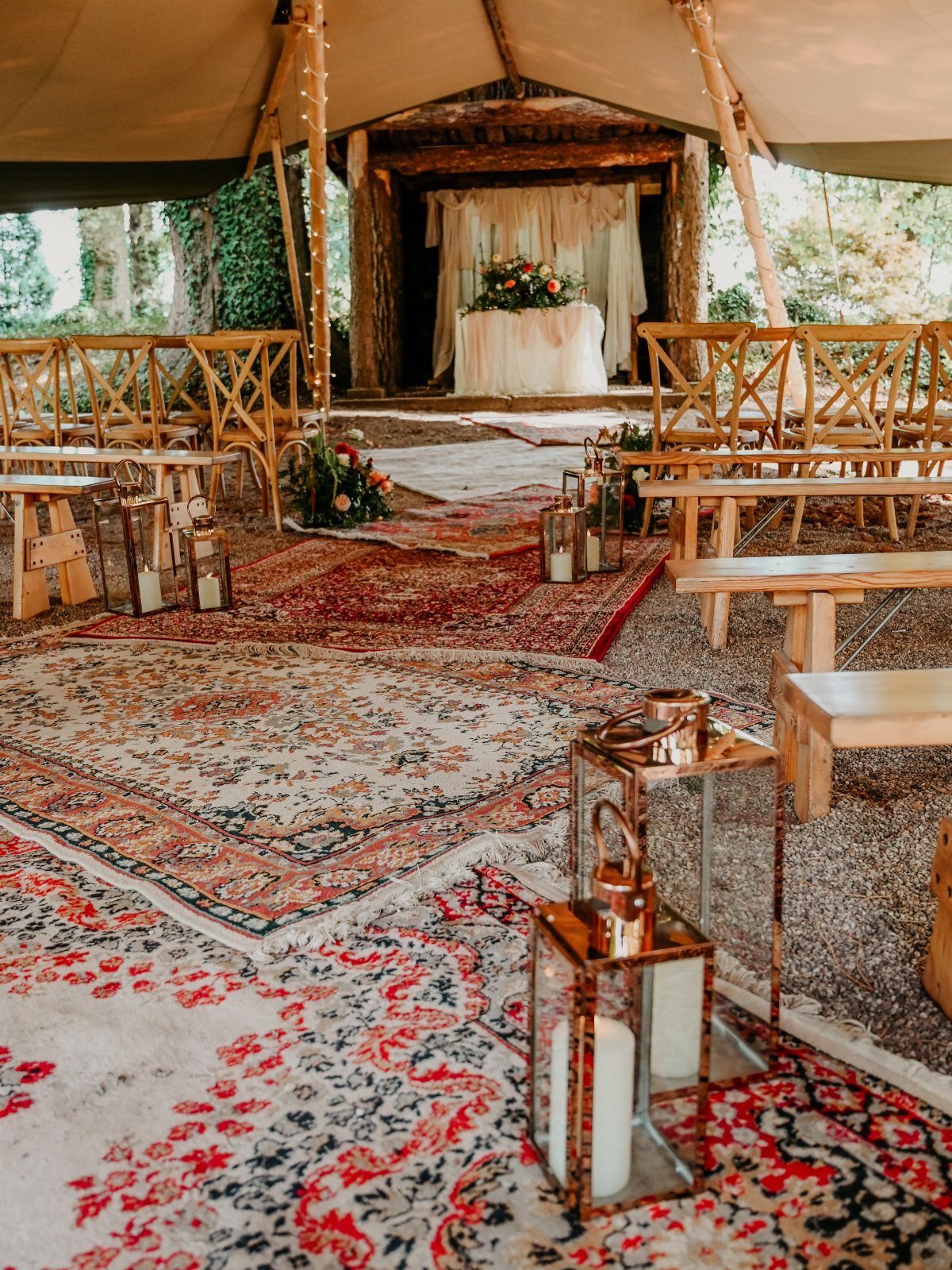
Poles leaned together under canvas give a teepee altar its bohemian shape, and the draped fabric and flowers soften the angles. Layered rugs, lanterns on the ground and wooden benches finish the look without much else.
Rugs are the cheapest way to fill the floor, so I would start there. Mix the patterns but keep one color family, and set lanterns along the edges so no one trips on them.
11. Chuppah
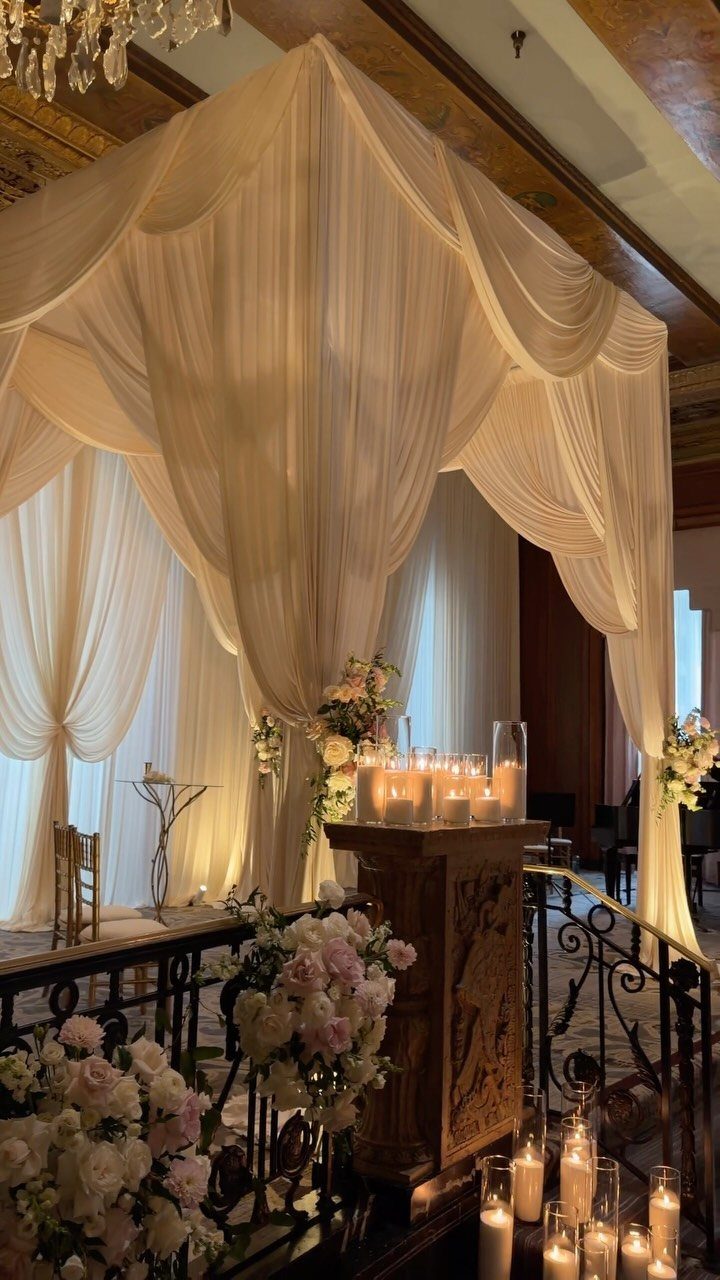
In a Jewish ceremony, the couple stands under a chuppah, an open-sided canopy that stands for the home they are about to build together. White draped fabric with pink flowers and candles gives it a soft, romantic feel indoors.
I would let the fabric be the main material and keep flowers to the corners and the base.
Candles look lovely, but ask the venue about open flames before you buy any, and consider flameless ones if the answer is no.
12. Floral Crescent Ground Installation
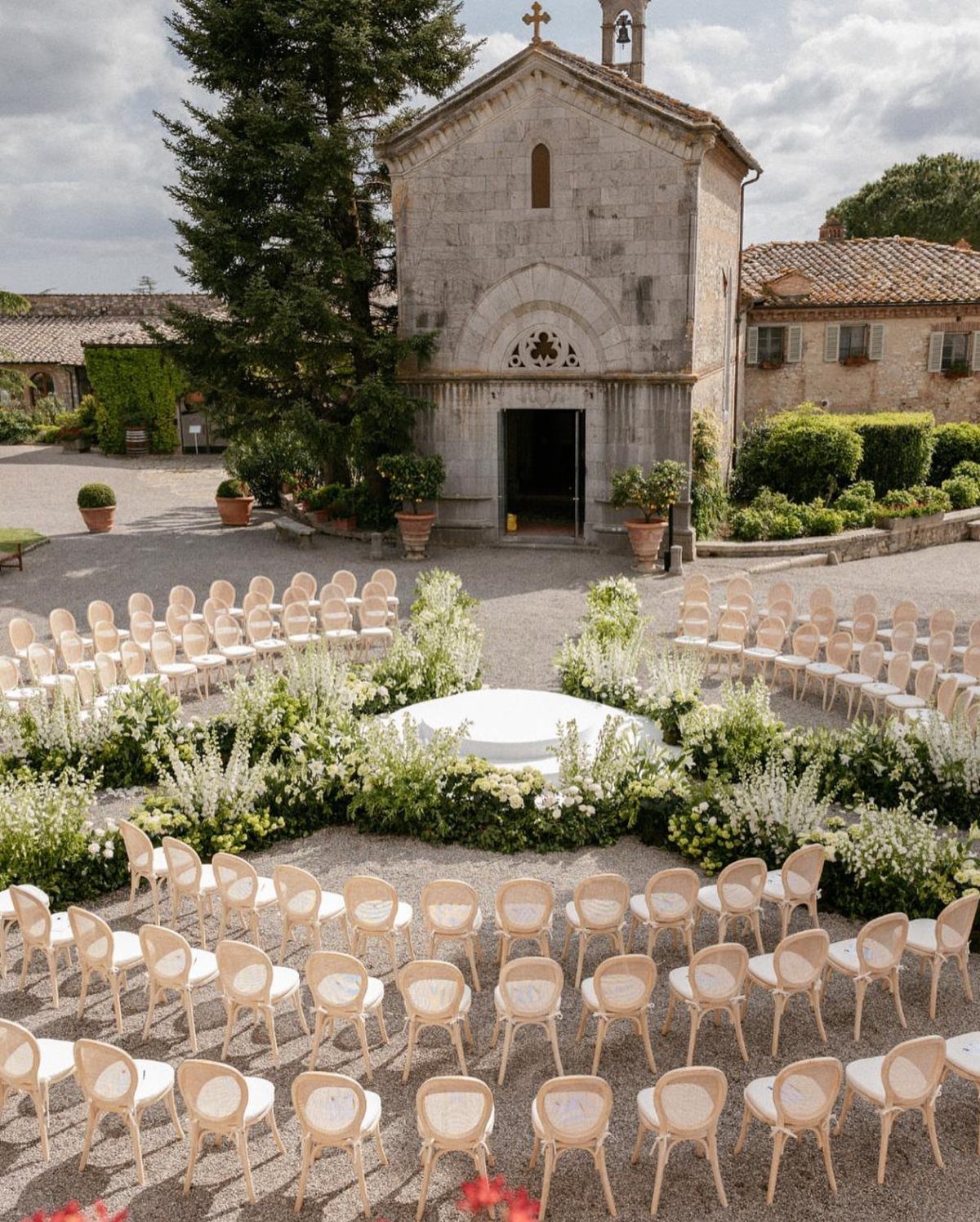
Laying flowers on the ground in a crescent curves around the couple without putting anything above their heads. In a stone courtyard, white blooms against gravel stay crisp, and the chairs in a semicircle echo the shape.
This is a good choice if you want flowers but no arch to build. Keep the crescent wide enough to read from the back row, and put the biggest arrangements nearest the platform.
Choosing the Right Altar
Rustic, weathered pieces work where the rest of the setting is relaxed too; drop one into a formal black-tie ballroom and it starts to look like a prop.
Check the color temperature, too. Copper pipe catches sunset tones outdoors, but under LED light indoors it can turn orange and sickly.
Visit the venue at the time of day your ceremony will happen, since a noon tour shows you different light.
Personalization Options
An heirloom only matters on the day if your guests can actually see it from their seats.
Metal finish changes the mood of any frame. Brass and copper soften angular shapes, while matte black or crisp white keeps them sharper and more current.
If a shape means something to you, pick it for that meaning and not because it will look good in photos.
For book lovers, try a stack of vintage books topped with a floral arrangement, plus a few lines from favorite novels.
Seasonal Considerations
Ask your florist what looks best the week of your wedding, not just in your month.
You pay for the number of flowers, not for the frame they sit on. Full blooms cost noticeably more than a greenery-based design, so on a tight budget, lean on in-season greenery for most of the volume.
Frequently Asked Questions
What are some creative ideas for a wedding altar?
A gold circular arch, a real tree trunk, or an old wooden door standing in a forest all go beyond the standard floral arch.
A round arch carries the symbolism of a never-ending circle, while a living tree skips the build entirely because the focal point is already standing there.
How much does a wedding altar typically cost?
I can’t give you a reliable figure, because the price depends on the design and the builder.
Expect to pay extra for anything made to order, such as a sculpted geometric frame, since a stock arch is always the cheaper starting point.