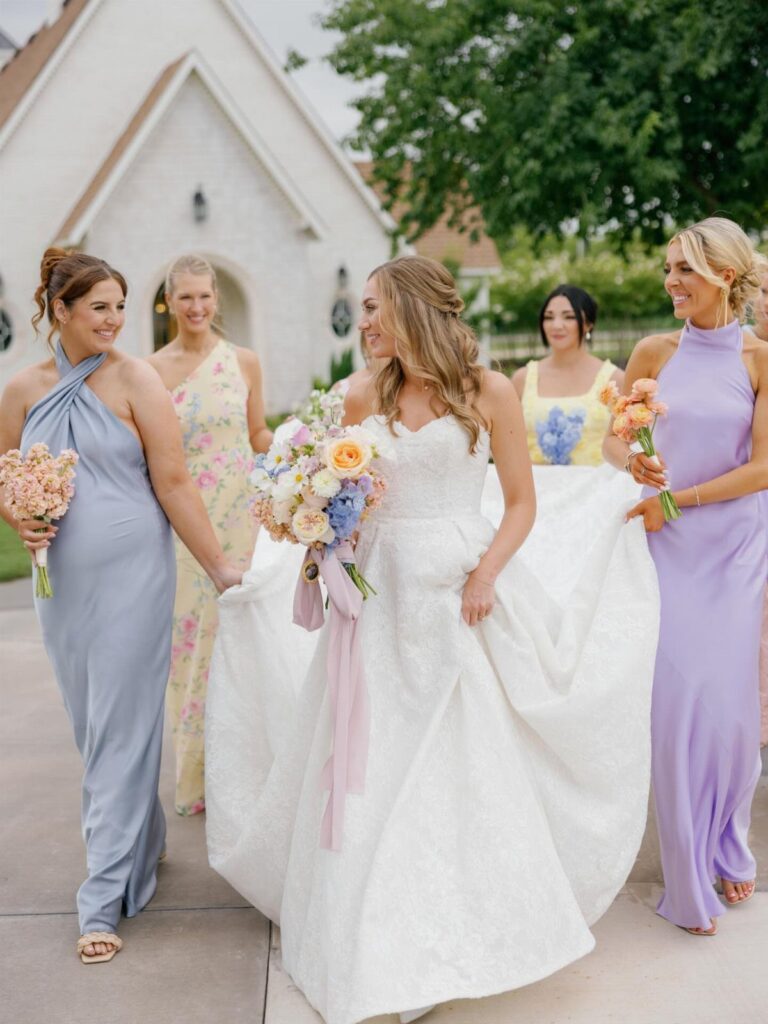
Every option here sits somewhere between full freedom and tight control: from letting each bridesmaid pick her own dress, to one gradient of nudes lined up from champagne to deep beige.
How much say your bridesmaids get should follow how much your group’s bodies, budgets and comfort levels differ, because a lineup that varies widely does better with guardrails than with a strict uniform.
Whatever you choose, lock down one or two things, like fabric and length, and let the colors vary inside them.
1. Mix and Match Dresses
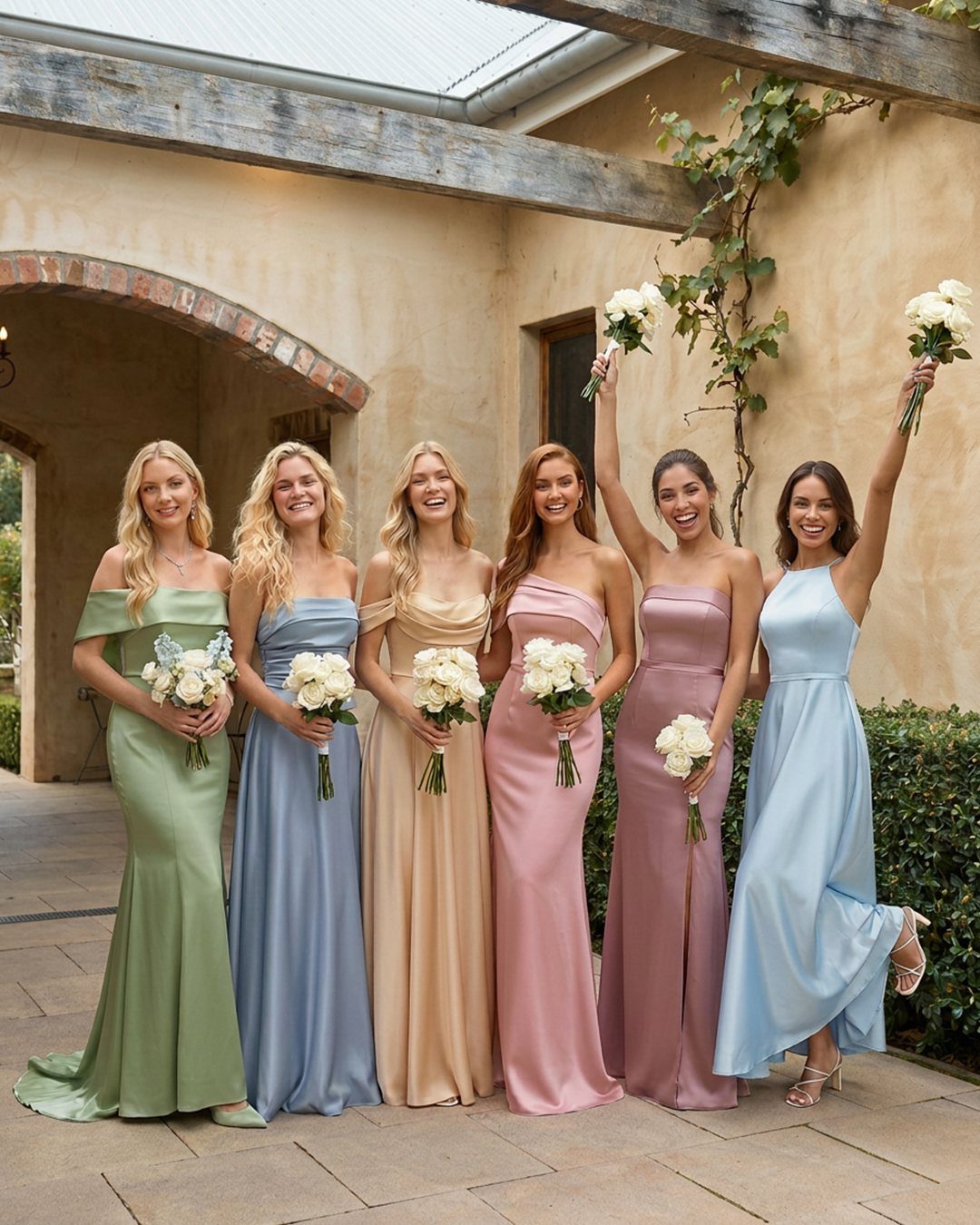
Handing each bridesmaid the freedom to pick her own dress solves the fit, budget and comfort problems in one move.
Every woman in your lineup has a different body and a different bank balance, and she will wear the gown she chose happily.
Set a few guardrails so the group looks planned.
Pick one fabric, such as the satin here, and one length, and the colors will read as a palette instead of chaos. Ask for a screenshot before anyone orders.
White bouquets help too, since they tie mismatched dresses together.
2. Same Color, Different Styles
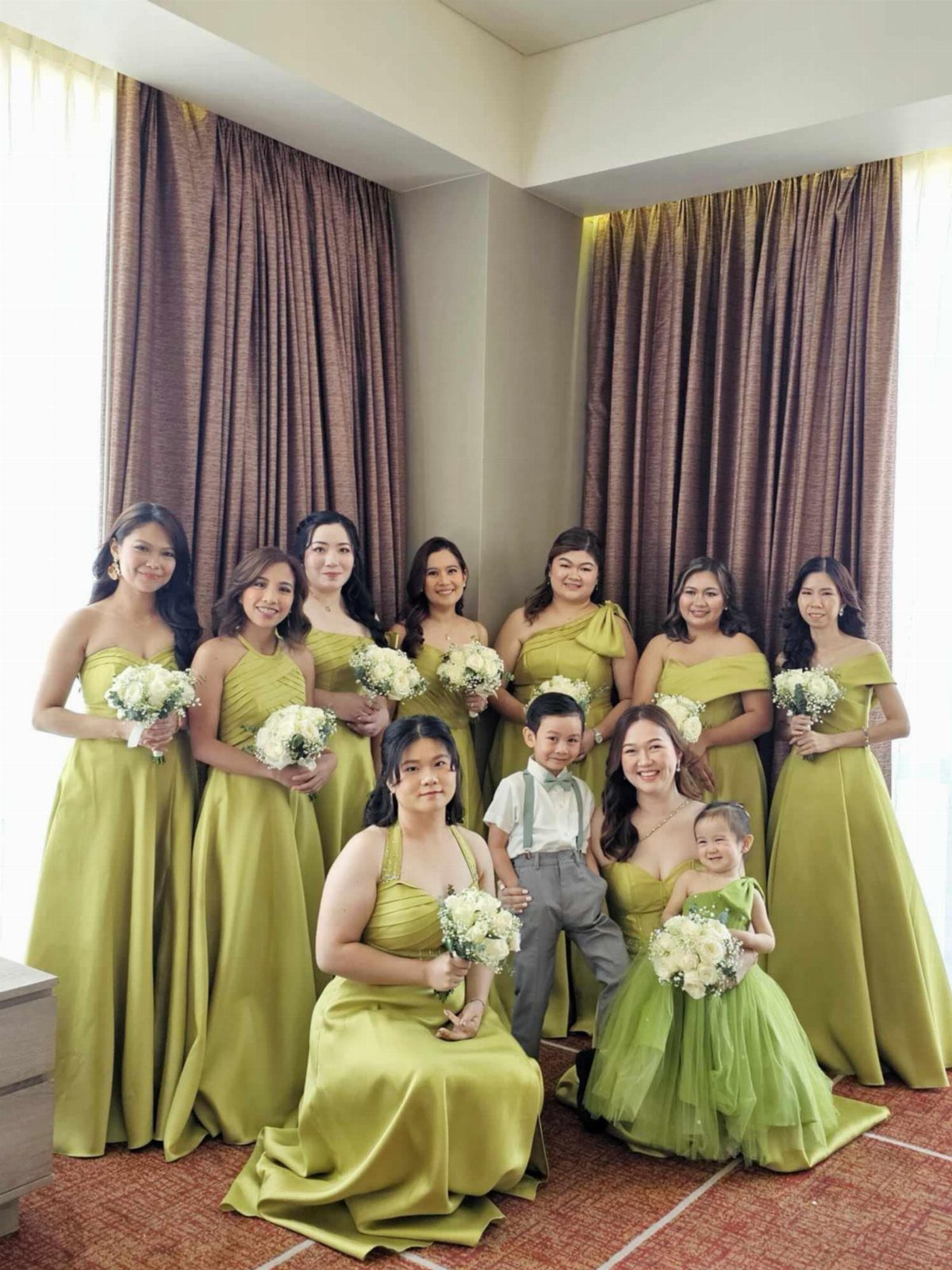
Chartreuse is a hard color to wear, and letting each bridesmaid choose her own silhouette is how I would handle it. One shade, many cuts: some women want sleeves, some want a plunging neckline, and everyone gets to be comfortable.
Order fabric swatches from a single shade name and brand if you can, because dye lots vary and a green can drift from olive toward yellow. Compare everything in daylight before anyone buys.
Keep the bouquets white, as they are here, so the dresses carry all the color.
3. Gradient Shades Bridesmaids Dresses
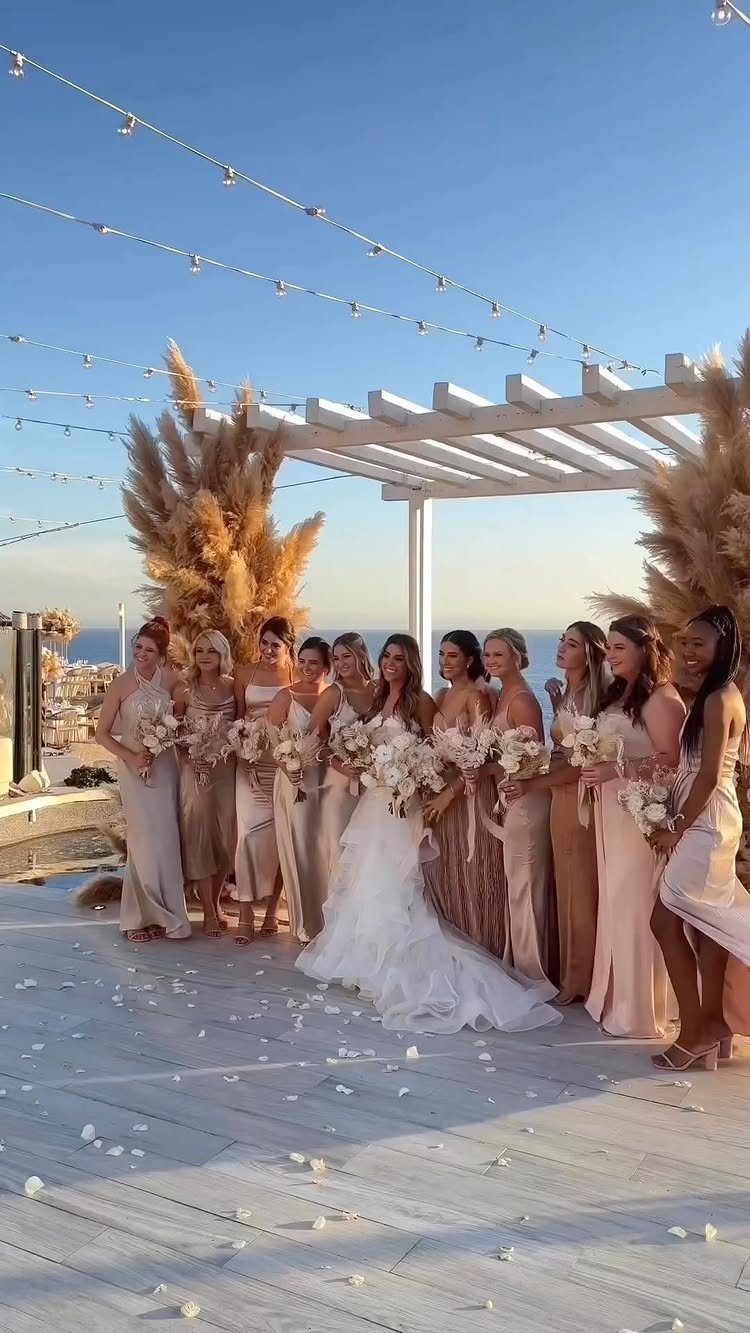
A gradient runs from the lightest champagne to the deepest beige, and the order you line people up in matters as much as the dresses.
Place the palest shade nearest the bride and move darker toward the ends, and the group frames her instead of competing with her white gown.
Nude tones are close to skin color and to white, so pick shades with real separation between steps. Otherwise the gradient disappears in photos.
Pampas grass, as in this setting, suits the same warm family of colors.
4. Different Color Bridesmaids Dresses
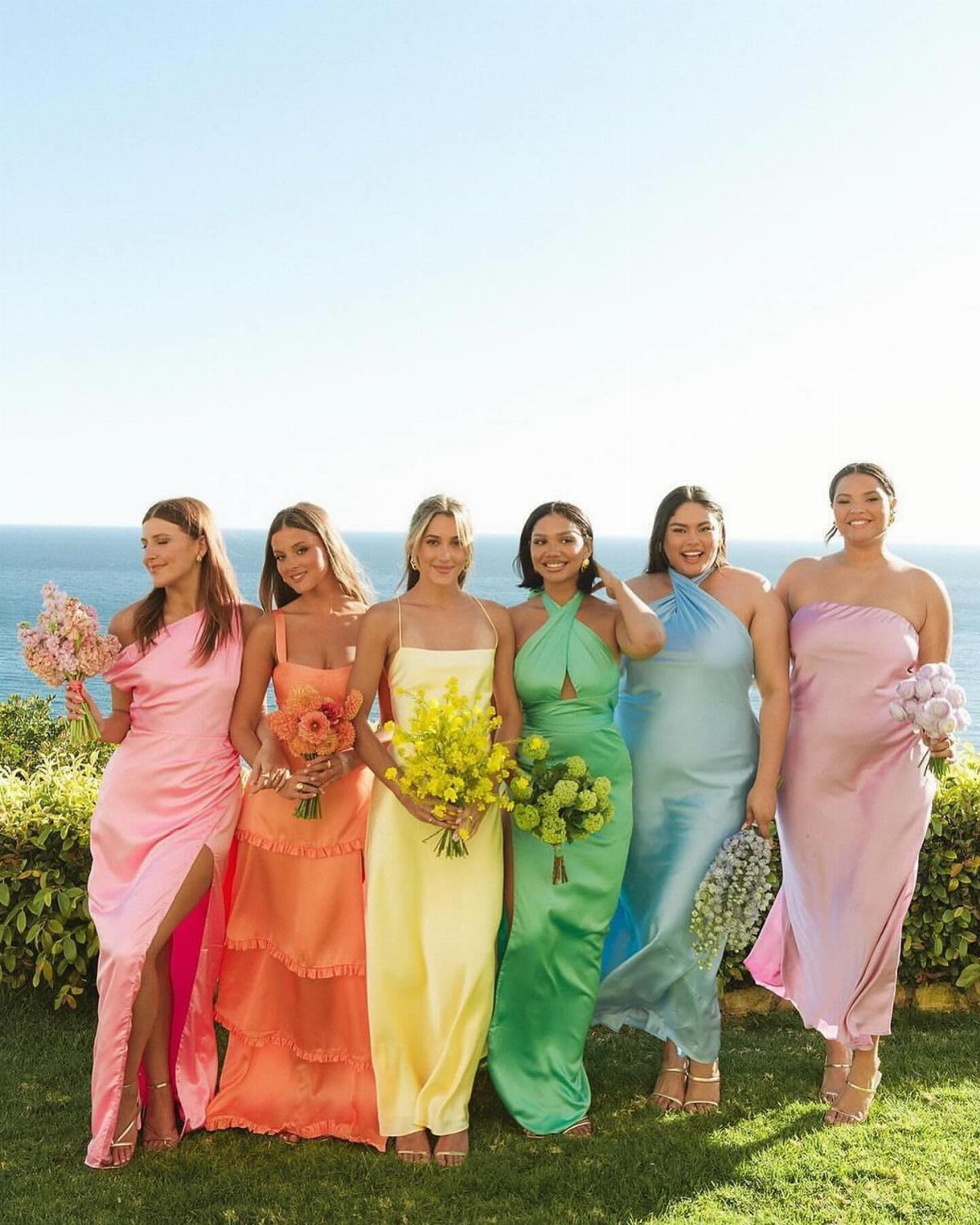
The group works because the fabric stays consistent across different colors. Satin in every dress gives the lineup a shared sheen, so the colors feel chosen rather than random.
Decide whether you want a true rainbow or just a loose mix, because that changes how many hues you need. With six bridesmaids, one color each is simple math.
Put the strongest color next to the bride’s side and spread the rest evenly. Bright colors hold up well against green grass and sky.
5. Rainbow Pastel Bridesmaid Dresses
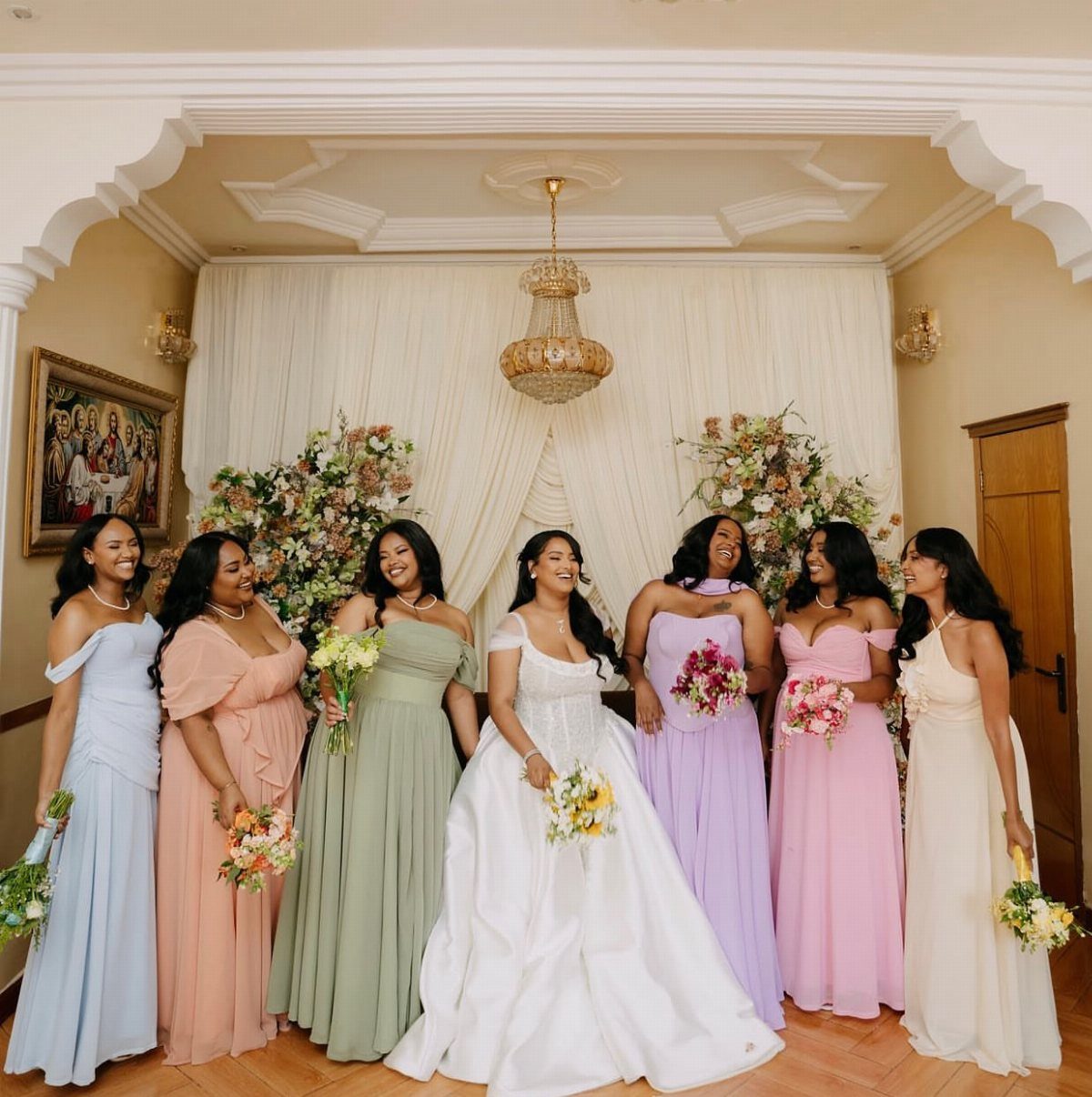
Pastels in light blue, peach, sage green, lavender and pink give a rainbow without the shock of bright color. They sit well against a white gown, which matters when the bride is standing in the middle of the group.
Keep every gown floor-length and in a matching soft fabric so the shades feel related. A cream dress, like the one here, can break up pastels that sit too close together.
I would pick colors in the same level of softness; one saturated dress will stand out immediately.
6. Earthy Sage Rust and Champagne
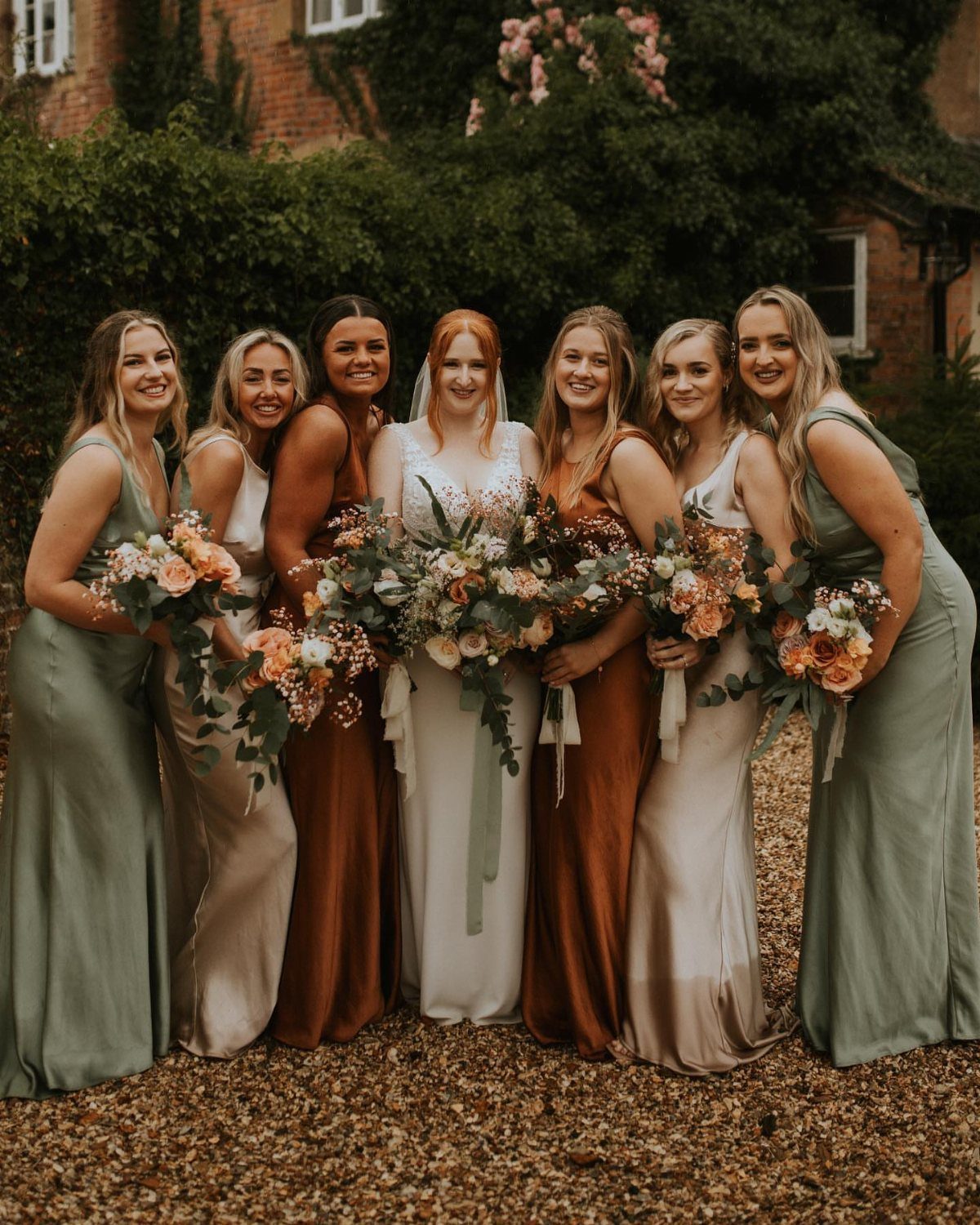
Sage, rust and champagne already belong together, which is why this palette is so easy to pull off. Green and orange sit opposite each other in tone, and champagne calms the pairing down.
Split the group into three roughly even thirds, then alternate the colors down the line so no shade clumps at one end. Long gowns keep the earthy look polished.
Brick, as in this setting, echoes the rust. Choose a bouquet with green and white and the dresses will do the rest.
7. Bold and Vibrant Rainbow
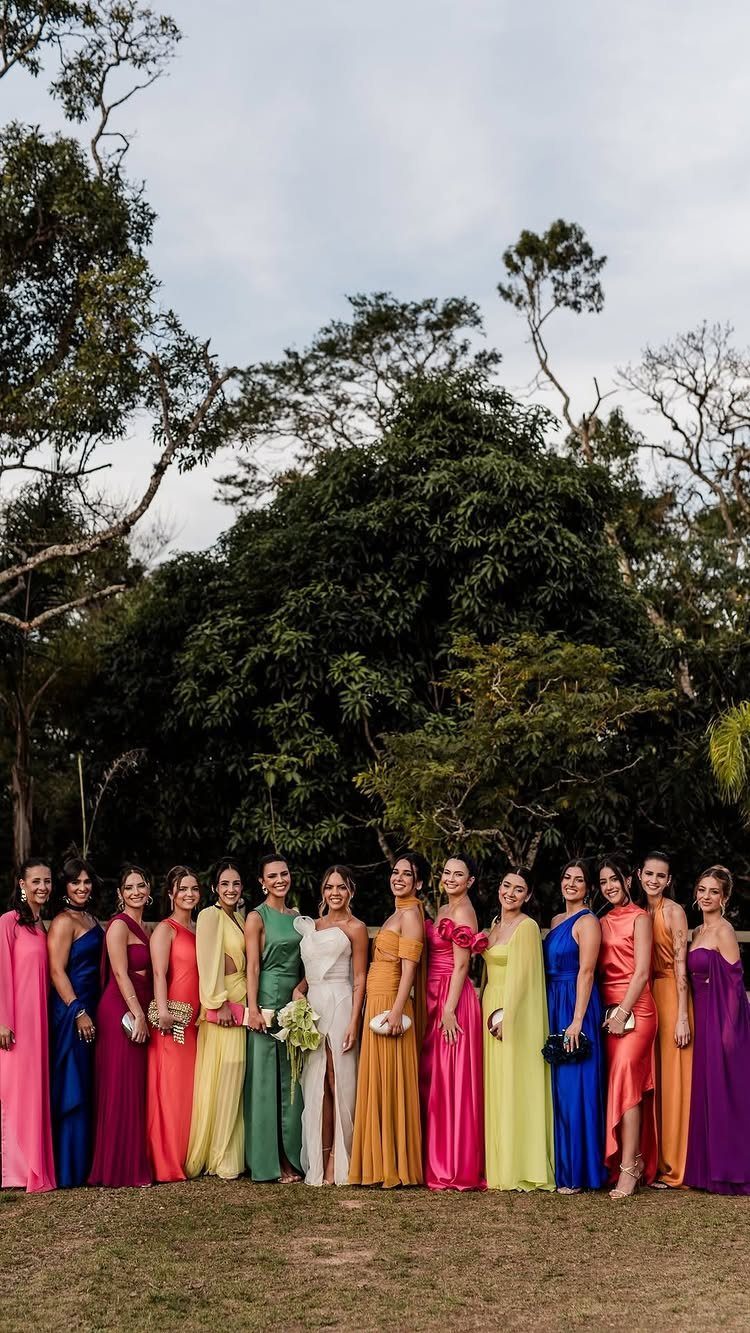
Saturated color asks for more discipline than pastels do, and long formal gowns are what keep a lineup this bright looking dressed up. Floor-length hems in rich primary and jewel tones read as formal, not costume-party.
A simple white gown lets the bridesmaids supply the drama. Open grass and green trees give bright dresses a calm backdrop, and indoors a plain wall does the same job.
Tips for Mismatched Dresses
Pick one or two things that stay fixed across every dress, and let the rest vary.
Color can be the anchor, or the silhouette, or the fabric. Whatever you lock down, say it in writing before anyone shops.
Settle length and fabric type early, since those 2 decisions do the most to keep a mixed group from looking accidental. Solids mixed with a floral or two add variety, as long as the palette stays the one you chose.
Choose the shades you want to see, then give the group room inside them.
Women of different sizes, shapes and skin tones will each find something that works, and nobody has to squeeze into a dress that was never going to suit her.
Bridesmaid Dress Selection
Tell your bridesmaids the choice is theirs within your palette, and mean it.
Every dress choice shifts the fit on a real body: the neckline, the hem length, whether there are sleeves, and the fabric, which can run from soft silk to stiff sequins.
Ask each woman what she feels most herself in, and what she would avoid. A dress she tugs at all night will show in every photo, while one she forgets she is wearing will not.
I would also set the palette, length and fabric type first, then step back. Those 3 decisions keep the group related, and the rest can come down to personal taste.
Not only that but you can choose something that suits the individual person, whether that’s colour, neckline, hemline, sleeves or no sleeves, silk or sequins – the possibilities are endless.
Visual Inspiration
Build a shared Pinterest board before anyone starts shopping, and invite the whole group to pin to it. Photos of the colors, fabrics and lengths you like answer most questions before they get asked.
Add a few images that show your overall theme, so each woman can see where her dress has to fit. Pins of dresses you dislike are useful too, if you label them.
A board also shows you who is drifting early. Ask bridesmaids to post their pick there before they buy, and a mismatch gets caught while it can still be returned.
Frequently Asked Questions
Can bridesmaids wear different colors?
Yes, and it can look polished as long as you set a few limits.
Choose a palette, a length and a fabric type, and tell everyone in writing before they shop. Those fixed points make the mix read as planned instead of accidental.
What are some common bridesmaid dress mistakes to avoid?
The biggest one is giving no guidelines, so the group ends up looking chaotic. Another is picking shades too close together: in a nude gradient, steps without real separation disappear in photos.
Mixing one saturated dress into a soft pastel group also makes it stand out immediately. Ordering fabric from different dye lots can shift a green from olive toward yellow, so compare swatches in daylight first.